
A few weeks ago, we already shared the first part of our travelogue from our trip to France. Now here’s the missing installment, focusing directly on the FaireFestival.
Babette's experiences
Wednesday, May 27
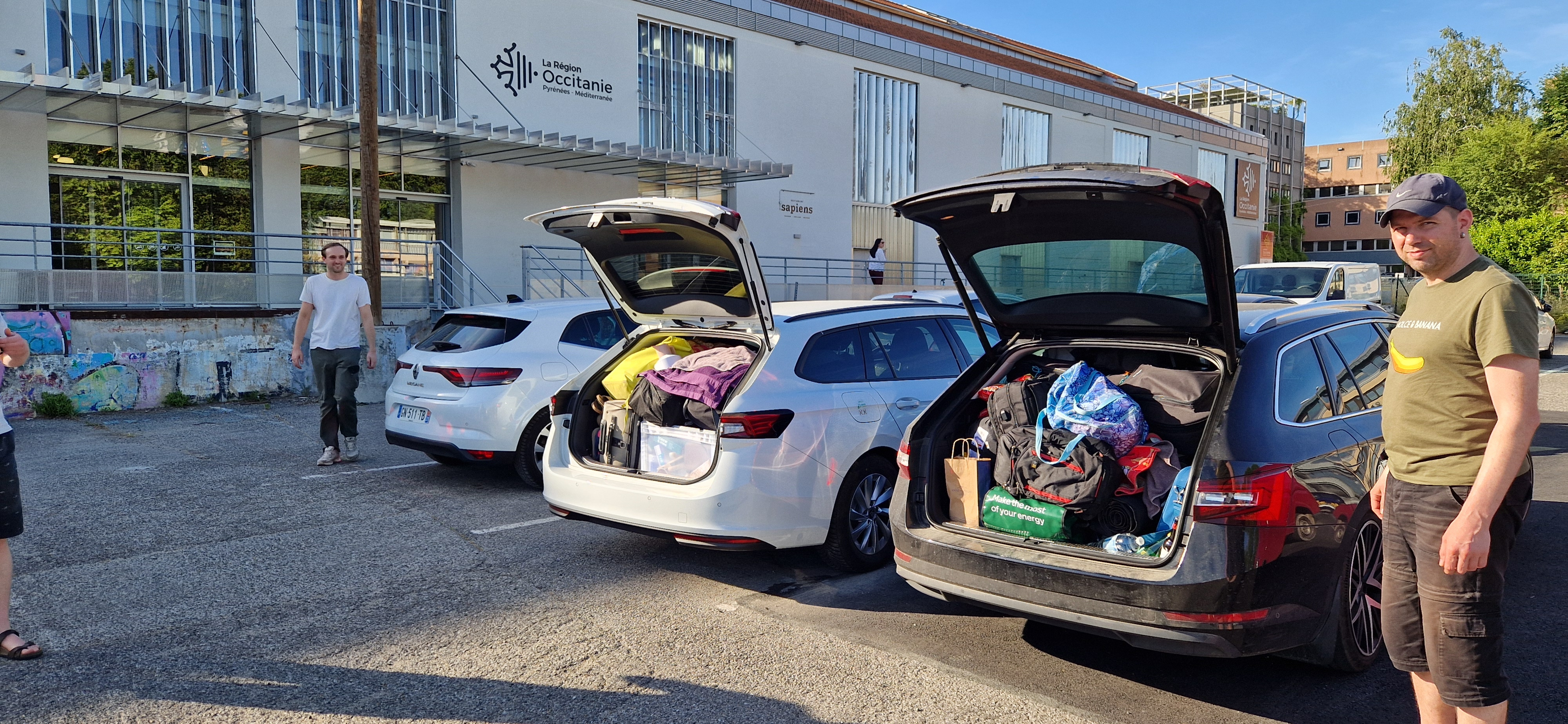
In the evening, at around 7.00 pm, we arrived at La Cité in Toulouse after a leisurely drive in temperatures of around 35°C. La Cité is a modern innovation and start-up hub for businesses, research and entrepreneurs, housed in the historic, extensively modernised industrial halls of Latécoère. On arrival, we were welcomed by a volunteer from RoseLab; we were allocated our exhibition stand and immediately given a guided tour of RoseLab, which serves as an open FabLab and the creative heart of La Cité.
Spanning over 800 square metres, this interdisciplinary maker lab offers state-of-the-art machinery, open workshops (wood, metal, plastic, ceramics and textiles) and spaces for collaborative projects that bring together people from the worlds of craftsmanship, art and technology.
We then held coordination meetings with the coordinators, William and Antoine, to plan the structure of our upcoming workshops. I also had a brief chat with the local textile experts. However, we postponed any concrete arrangements until the following day, as they were busy finalising the festival merchandise.
Thursday, May 28
The second day began with the festival’s official opening ceremony in the main hall. As well as manning our stand at the fair, I had the opportunity to catch up with Aurélien from Annecy, who had taken part in a residency in Chemnitz last year and worked at FabLab Chemnitz. This exchange was a striking demonstration of just how enduring and vibrant Franco-German networks are. The afternoon was taken up with intensive preparations. I prepared knitted items and my presentation for my own workshop.
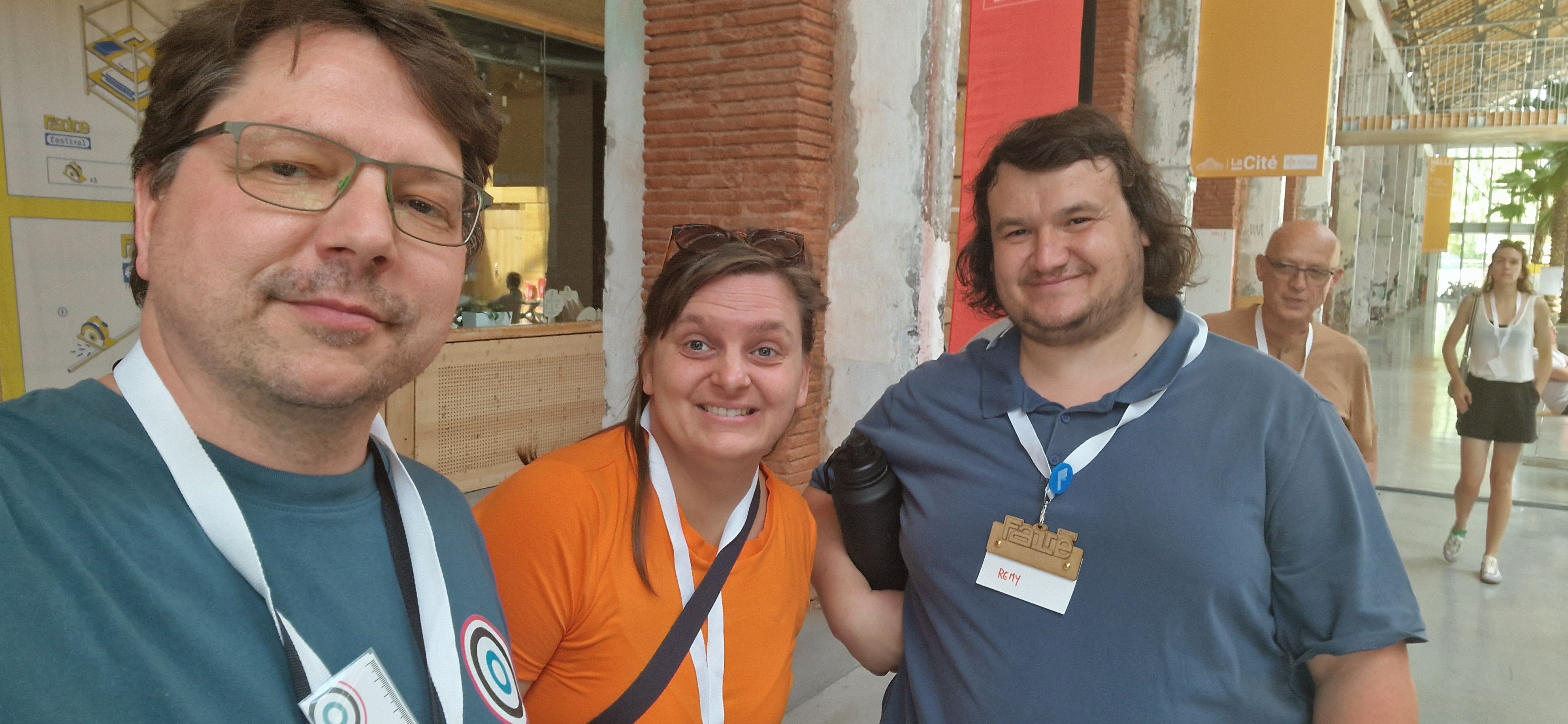
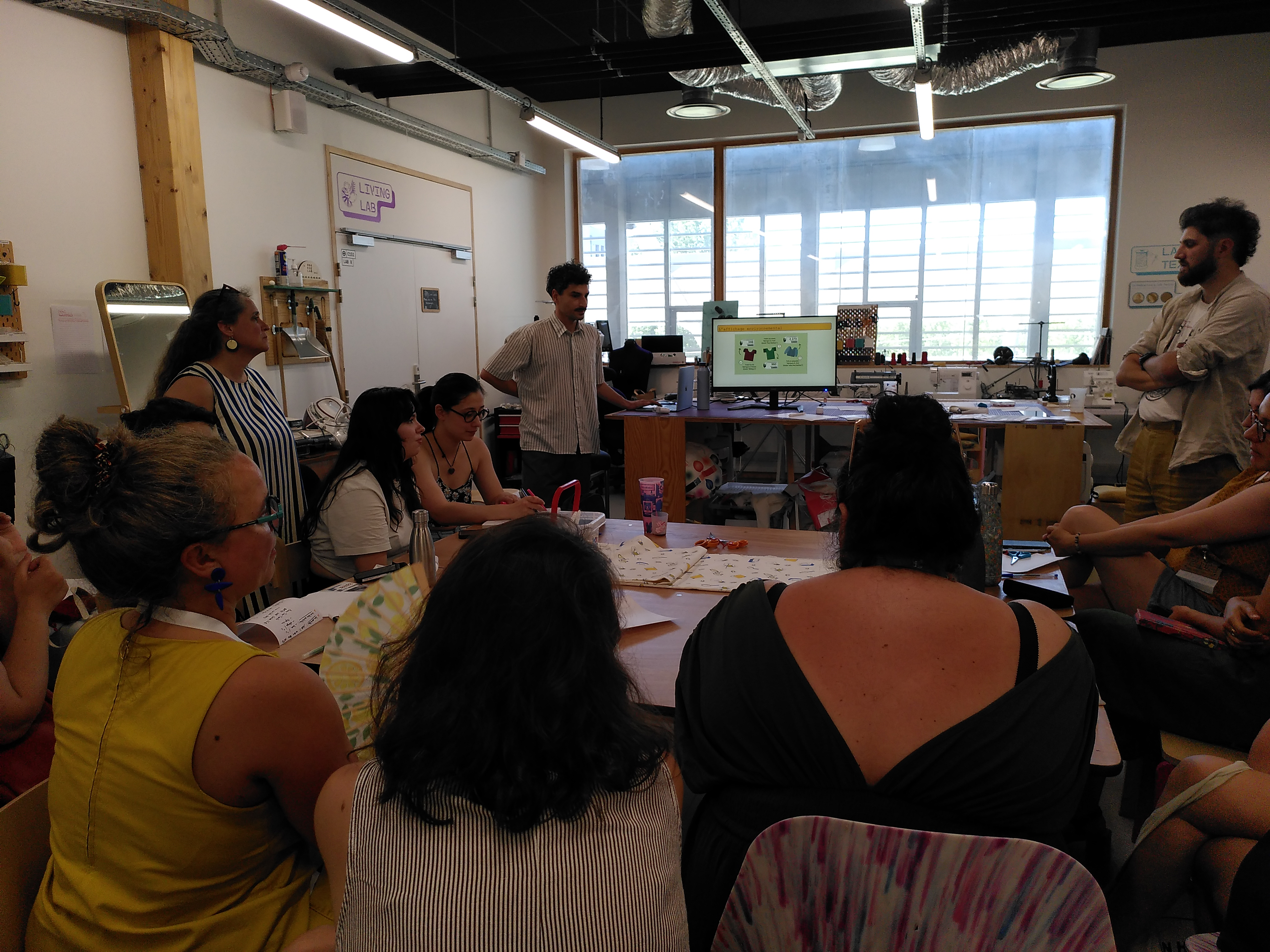
I also met Amélie, the manager of the RFF Lab, and Remy, a board member of Vulca.
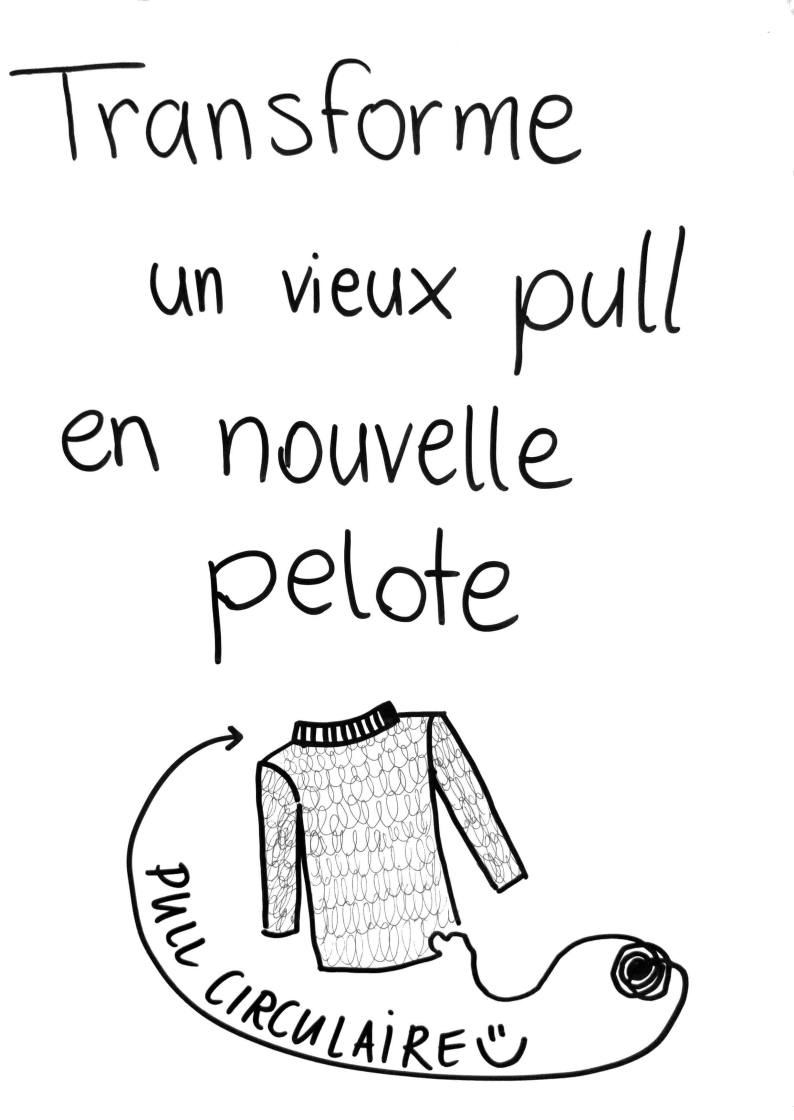
Together with Delphine Bawin (head of the textile workshop), I finalised the details for running my workshop and the equipment required. Together with Veronika, the interpreter and language facilitator, I then produced French promotional posters to specifically target the audience and break down language barriers.
Friday, May 29
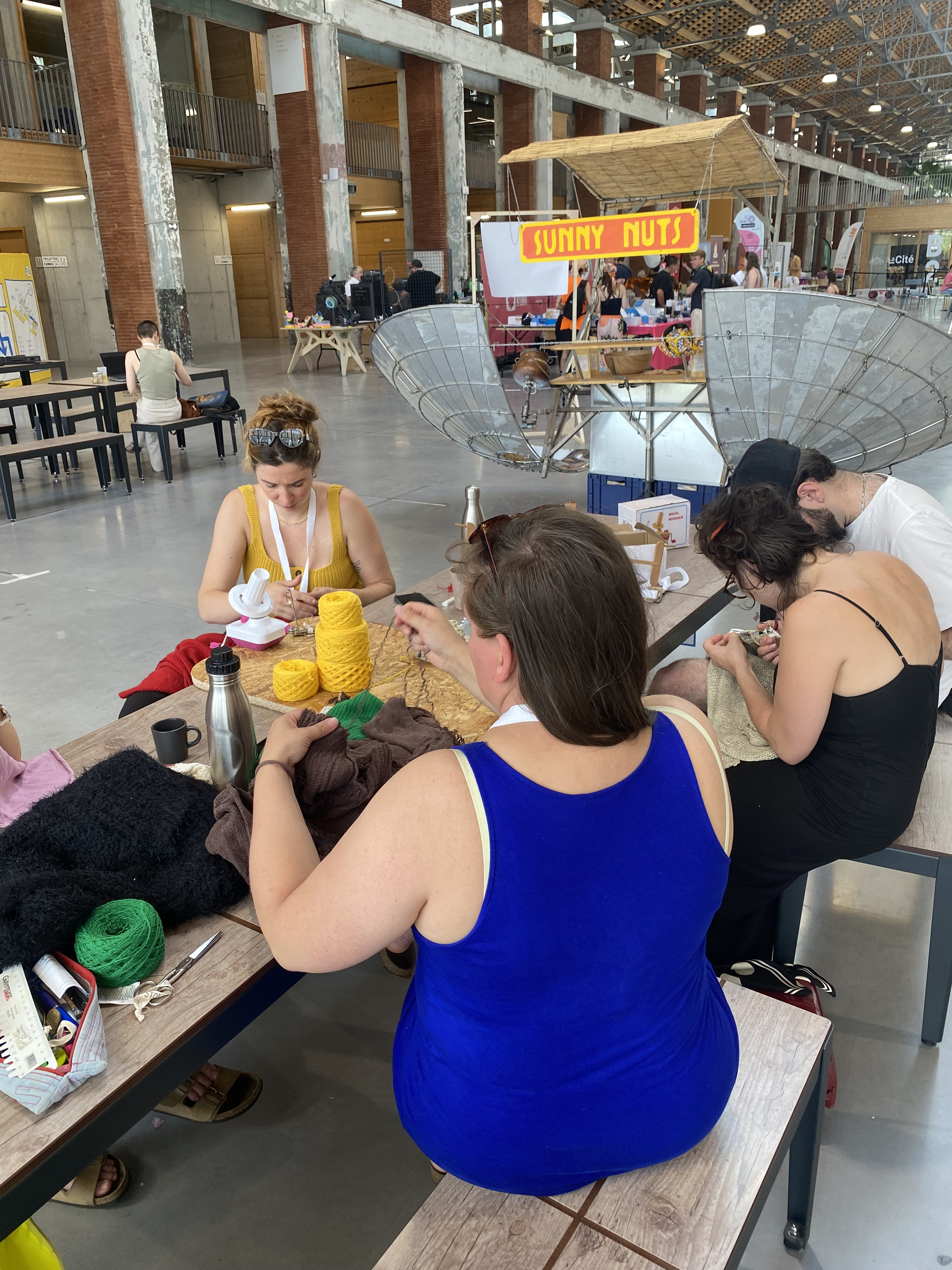
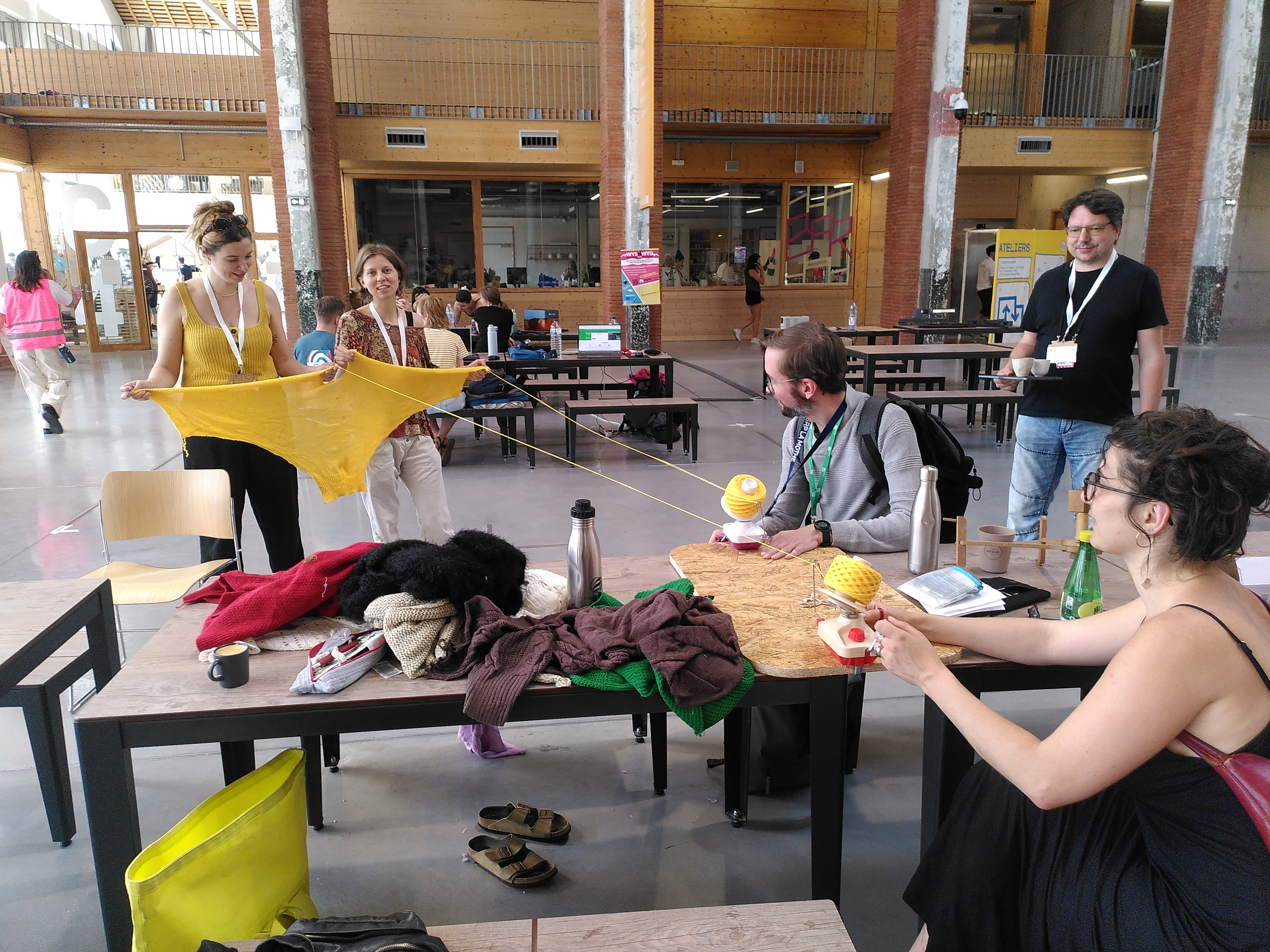
From 10.00 am, I first took part in the textile workshop ‘FABRIQUONS ENSEMBLE!’, which focused on textile labelling, garment manufacturing and environmental certifications. My own workshop on recycling knitted yarn from second-hand jumpers was subsequently successfully incorporated into the festival programme. Although the workshop had to be moved to a location slightly outside the actual textile studio, our self-designed poster attracted many interested visitors.
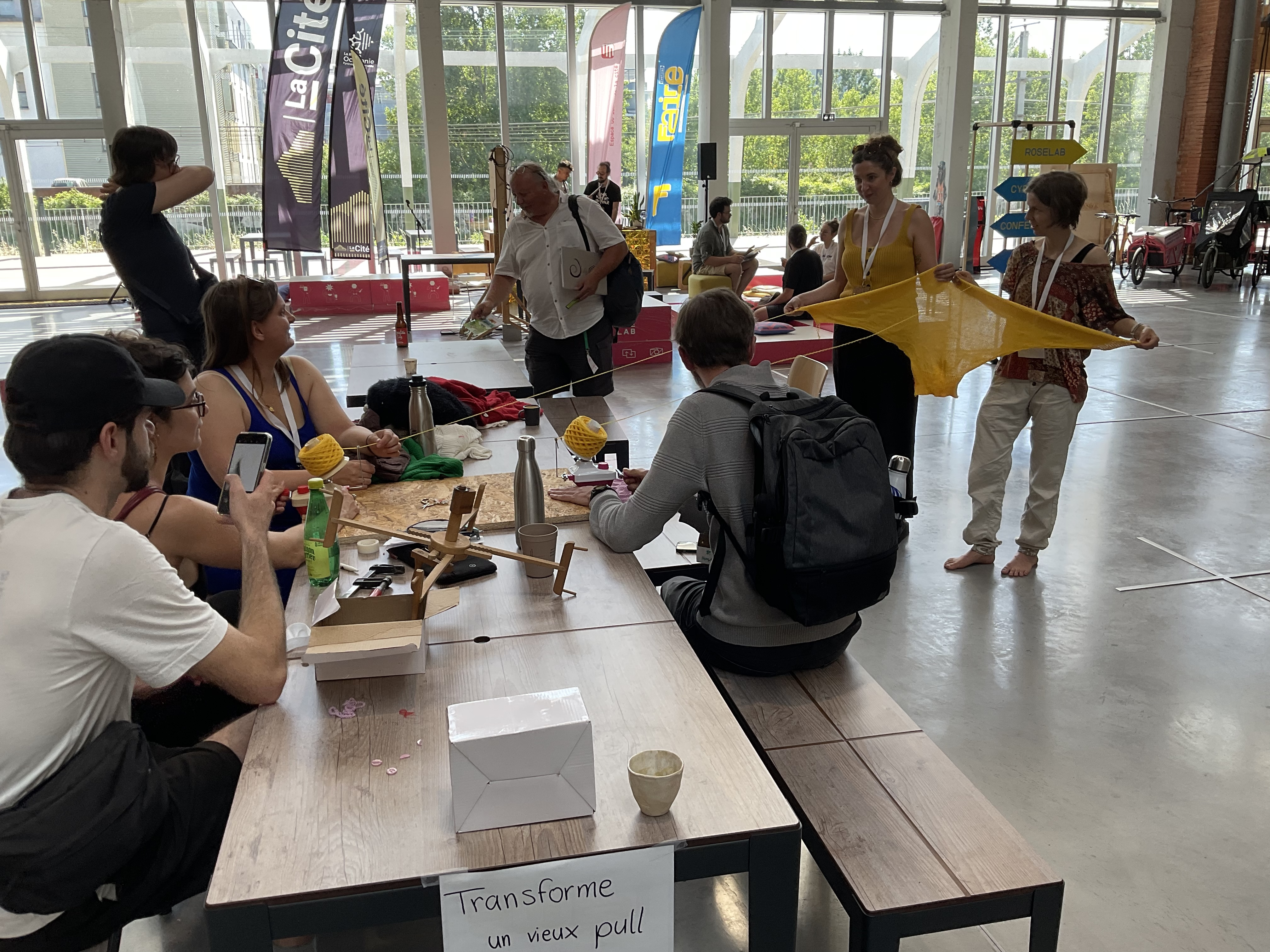
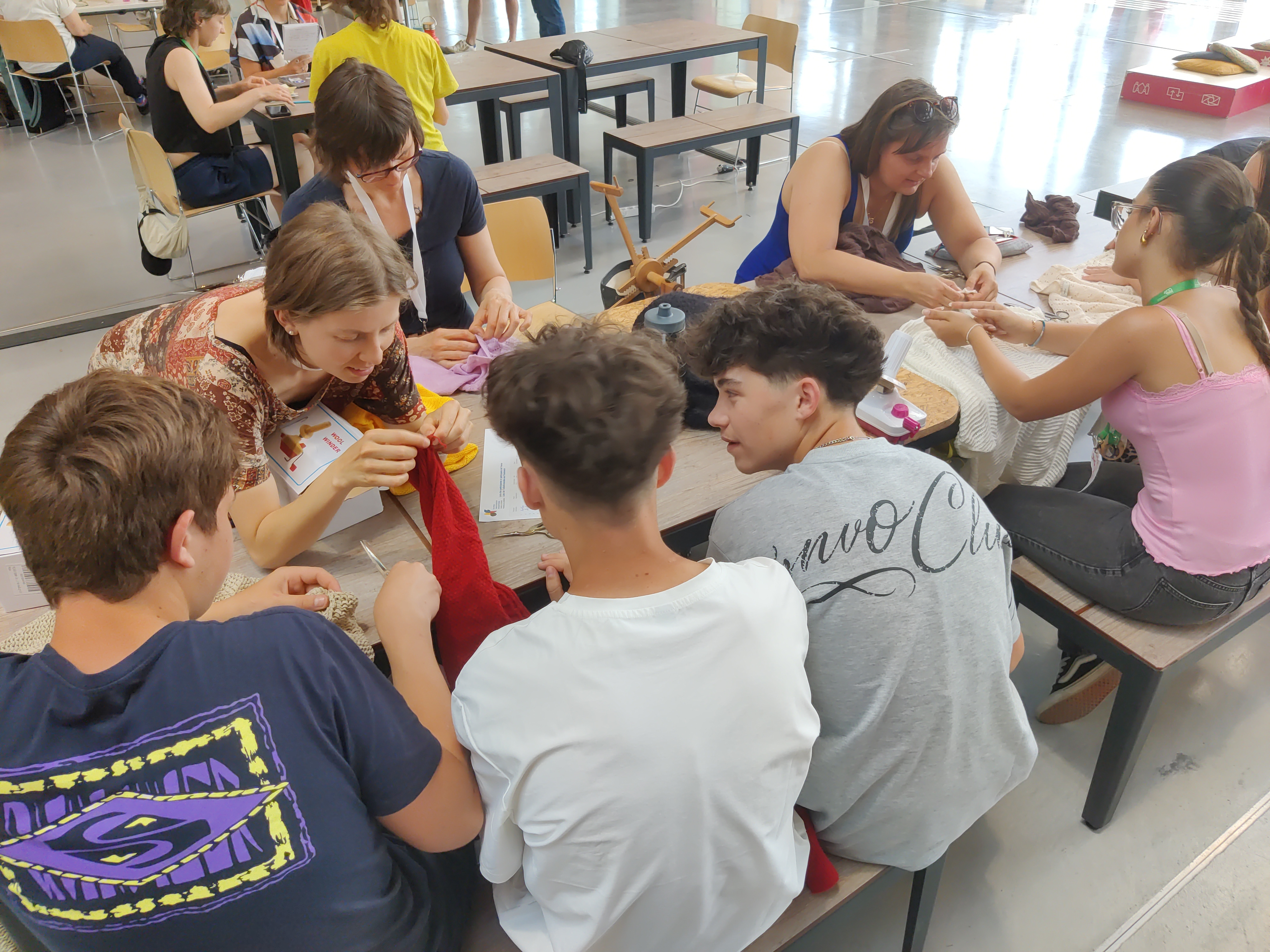
Between 2.00 pm and 4.30 pm, I showed a total of 12 participants, in small groups of three to four people, the technique for reclaiming yarn from worn jumpers. First, I demonstrated by hand how to separate the individual pieces, after which we worked together to extract the yarn from the jumper and wind it back into balls using the wool winders we’d brought along. This turned out to be a highly engaging group and team activity, which caught the attention of bystanders and encouraged them to join in. At the end, each participant was able to take home her own ball of recycled yarn. Among the guests was a designer with her own tufting studio in Toulouse, who gave very positive feedback and offered to try out the recovered yarn directly in her tufting work the very next day.
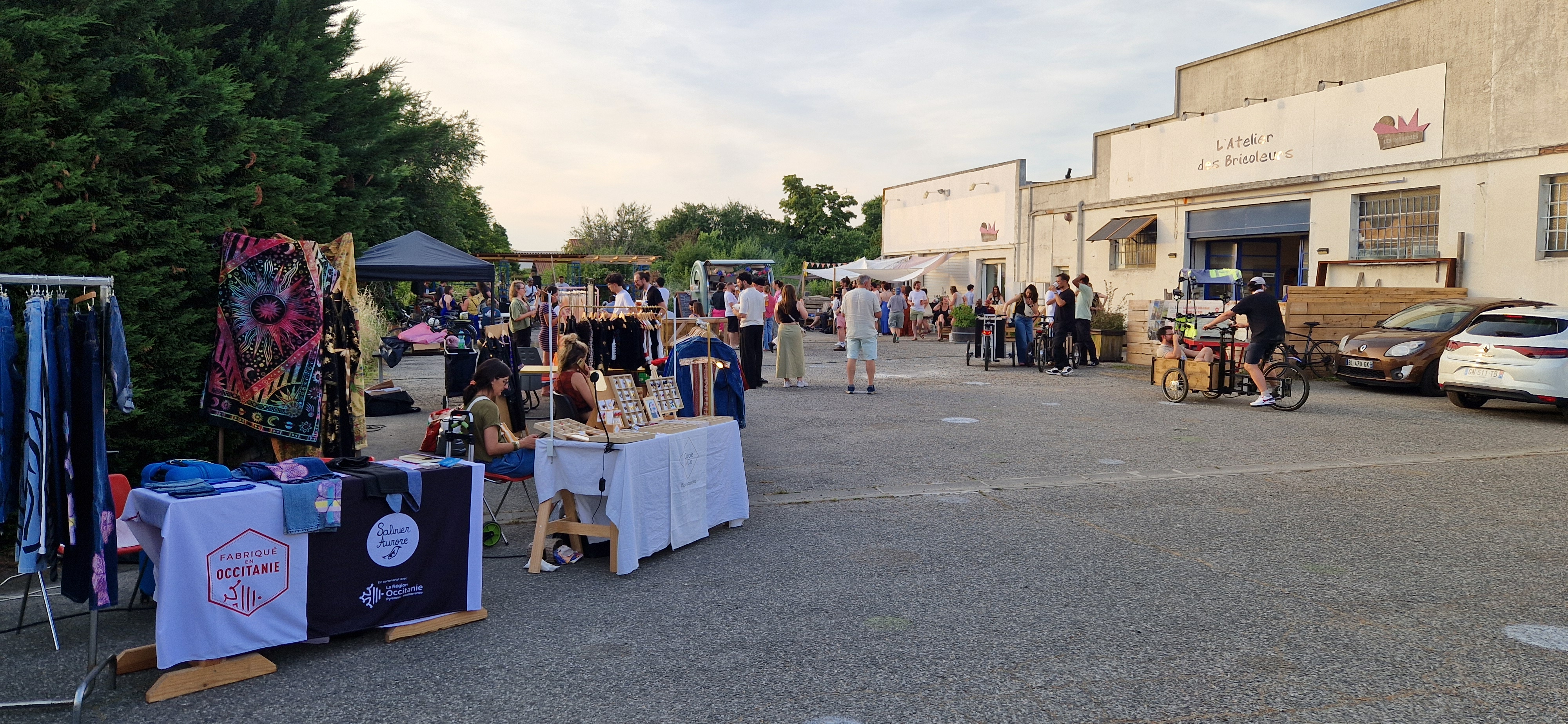
From 5.00 pm, the day drew to a close with the soirées at Les Imbroues. We visited the premises of L’Atelier des Bricoleurs, an open DIY workshop for woodworking and home improvement, which offers DIY enthusiasts professional machinery, tools and courses for their own projects. In a wonderful, relaxed atmosphere on the lovely outdoor grounds, we enjoyed French music, fresh galettes and browsed a small designer market. During this meet-up, I also had an in-depth discussion with Delphine about the UZINOU project. We visited this special textile space last year whilst we were travelling through Brittany for our inclusive project. We also spotted a few other mutual acquaintances with whom we’d already been in touch – the world of textile artists really is a small one after all.
Saturday, 30 May
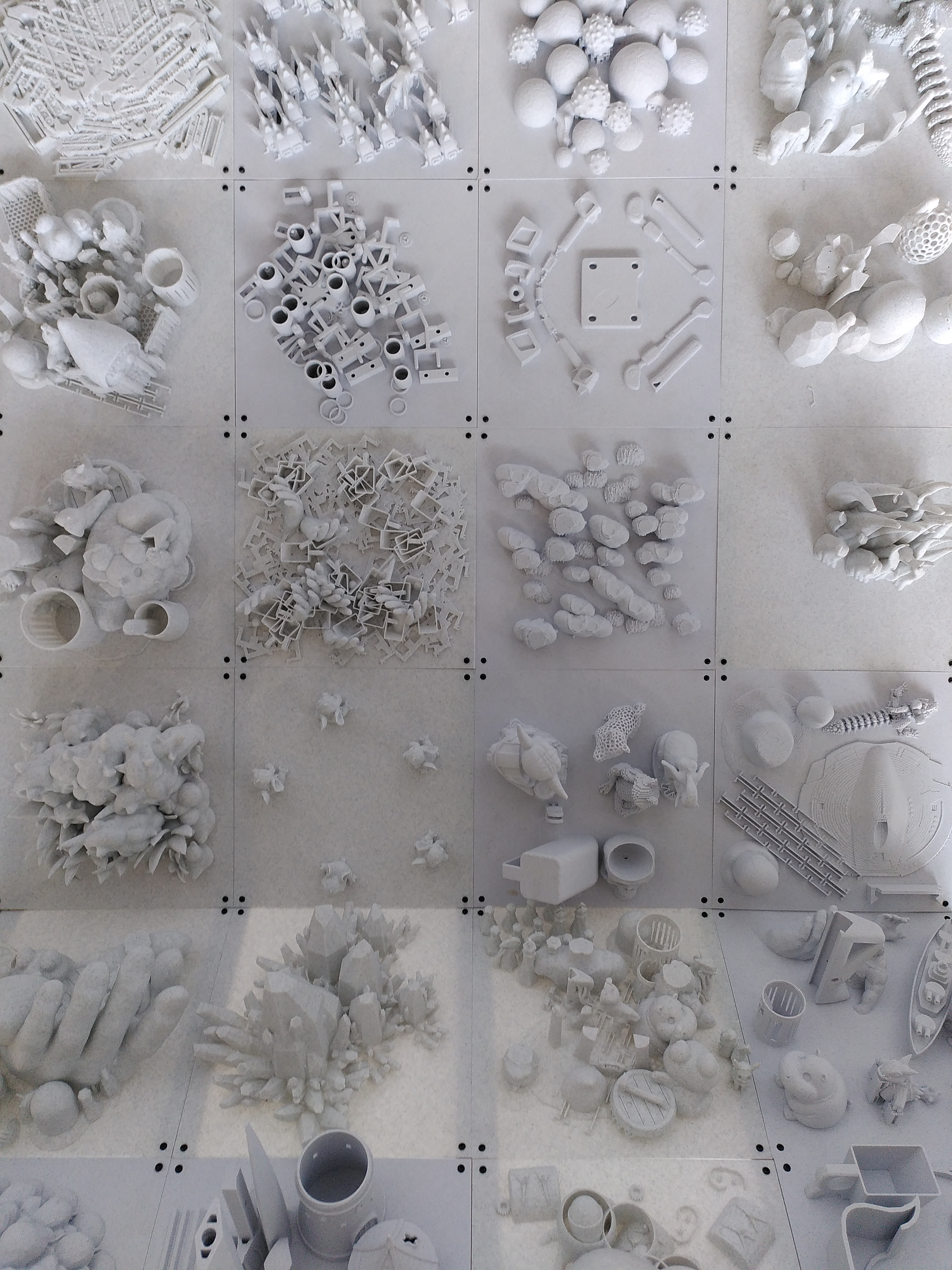
I spent Saturday taking an in-depth tour of the exhibition. I was particularly struck by the sculpture La Déferlante by Martin Guillaumie, which was created at the RoseLab. In it, Guillaumie addresses the threat of being overwhelmed by useless, AI-generated 3D-printed artefacts as an artistic warning against the production of digital waste. By combining randomly arranged plastic objects with a hand-drawn relief comic, his work contrasts the uncontrolled technological frenzy with human loneliness.
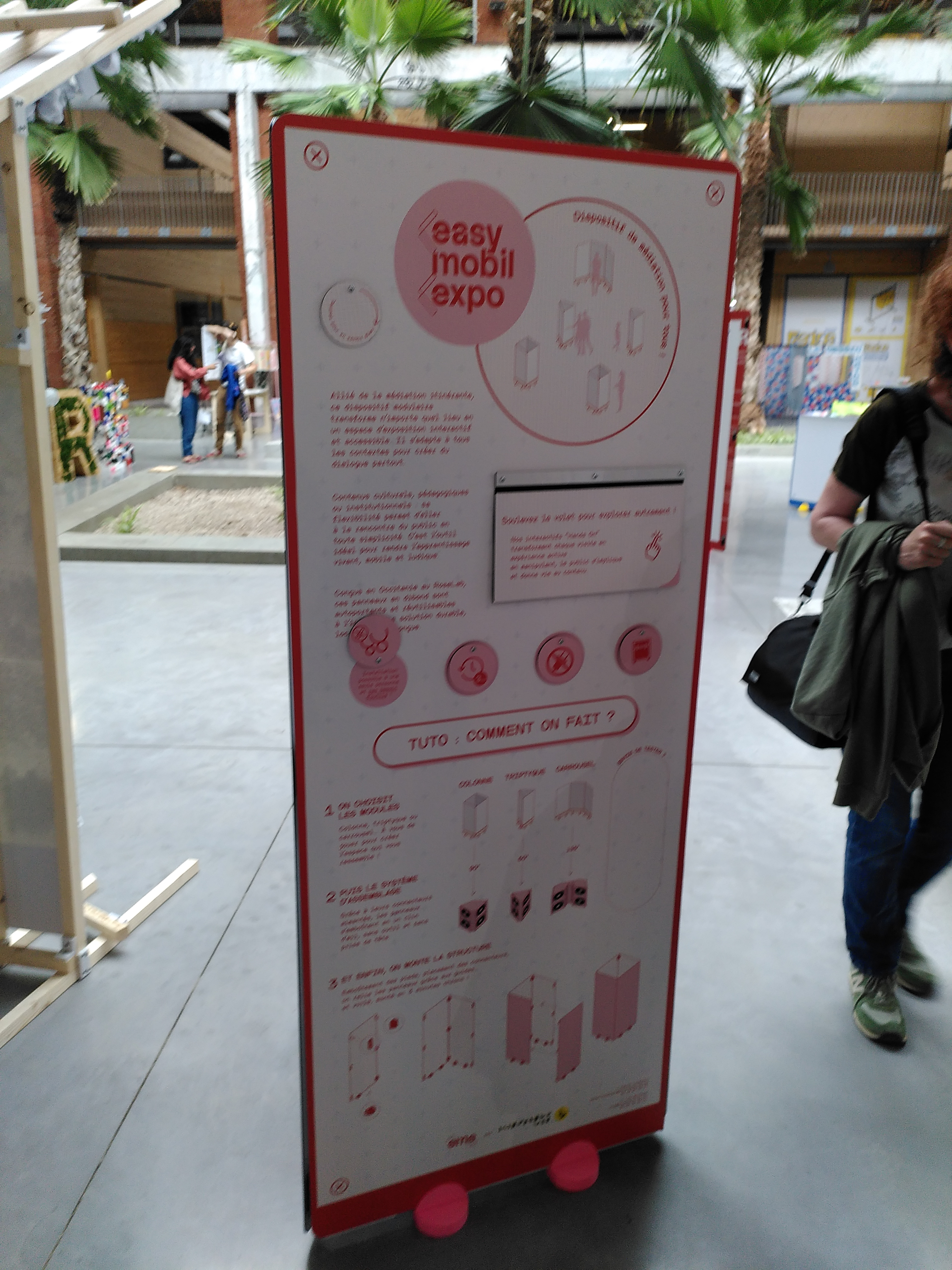
I was also impressed by innovative and sustainable concepts such as the modular, open-source exhibition stand system, Easy Mobil Expo, and a solar-powered food dehydrator.
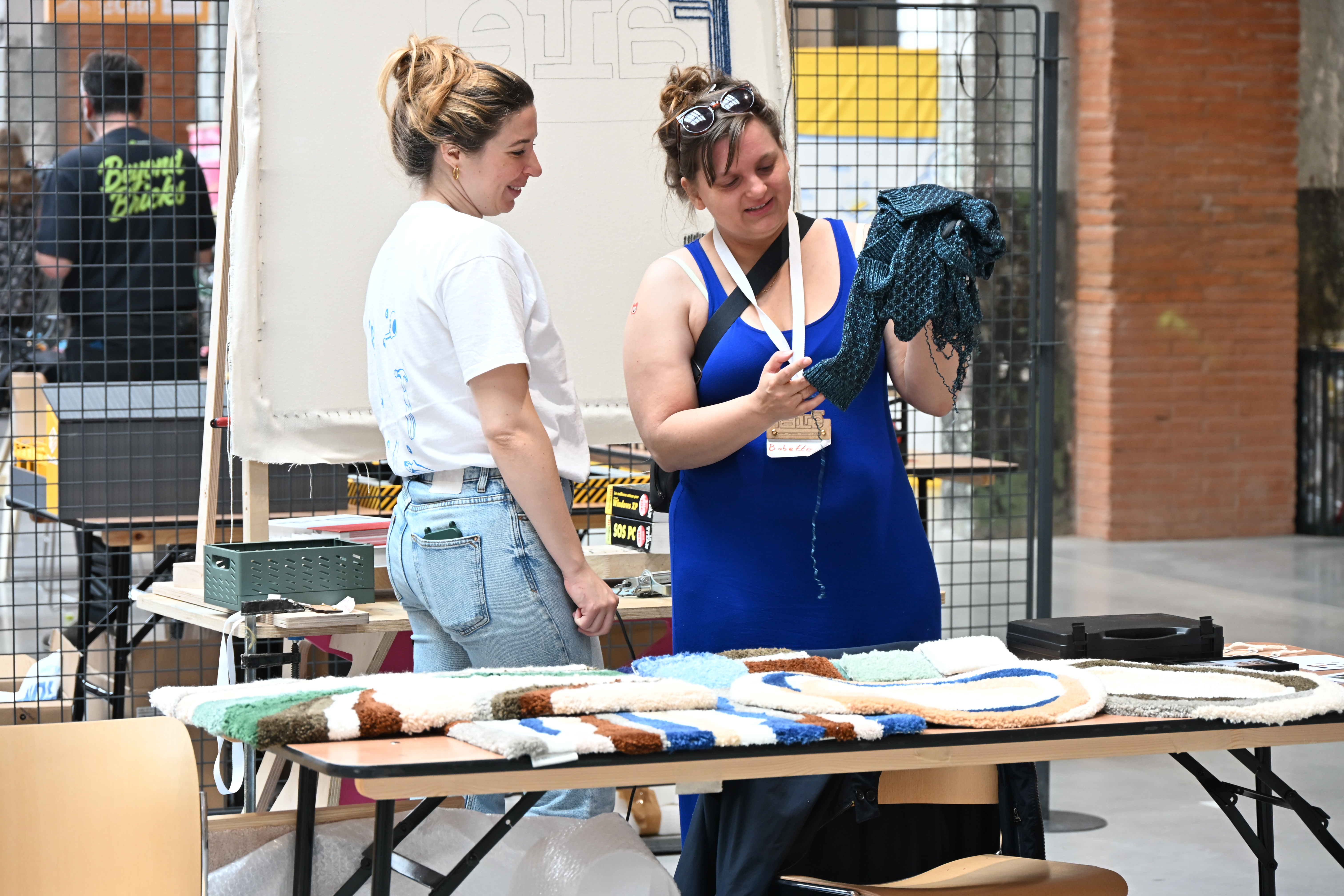
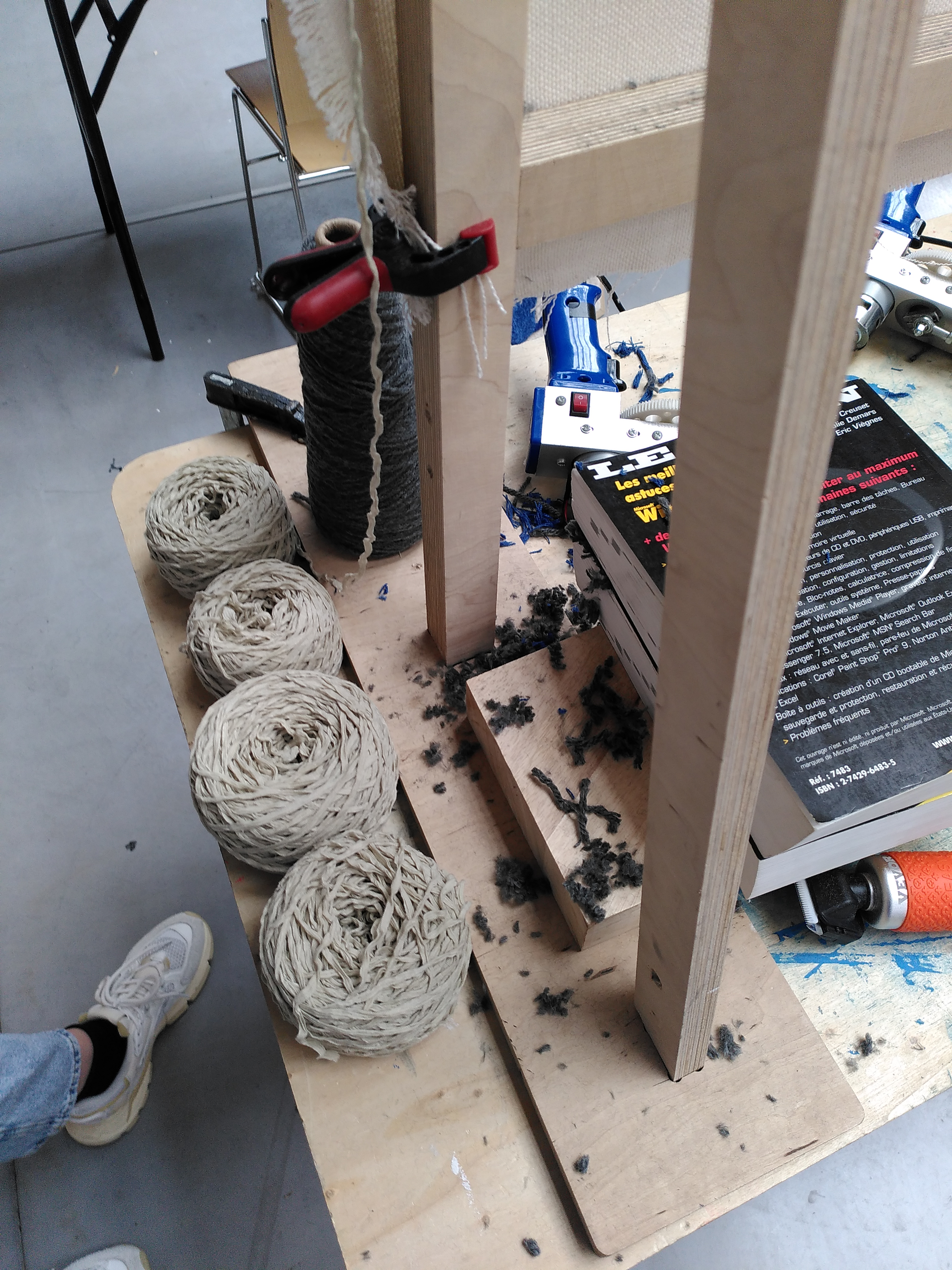
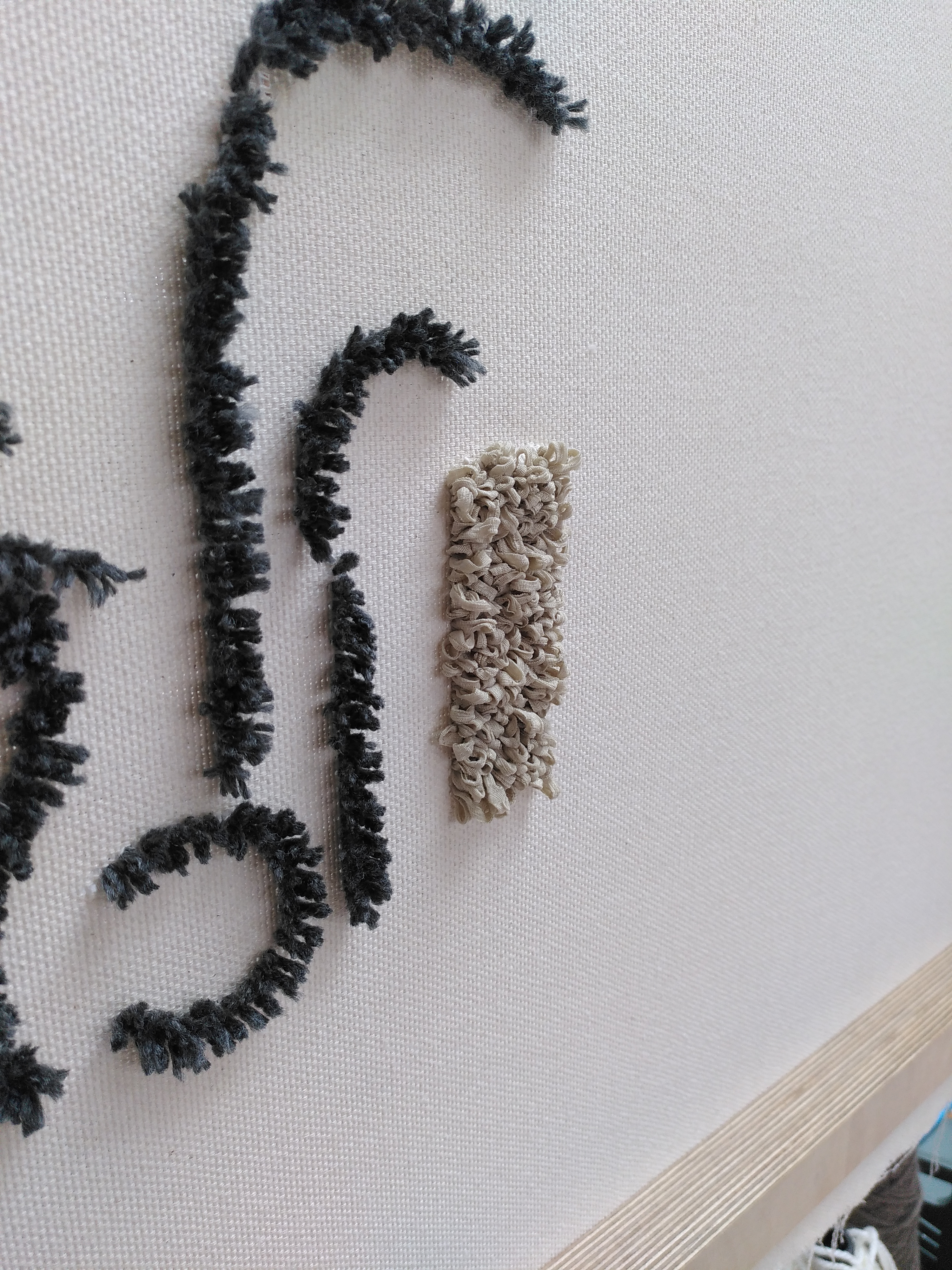
One of my personal highlights was at Mathilde Grandchamp’s stand, which specialises in hand-tufted tapestries and carpets. We tried out the ribbon yarn I’d unravelled the day before using a Loop Pile tufting gun, which worked brilliantly and proved that recycled yarn is also a valuable resource in professional craft techniques.
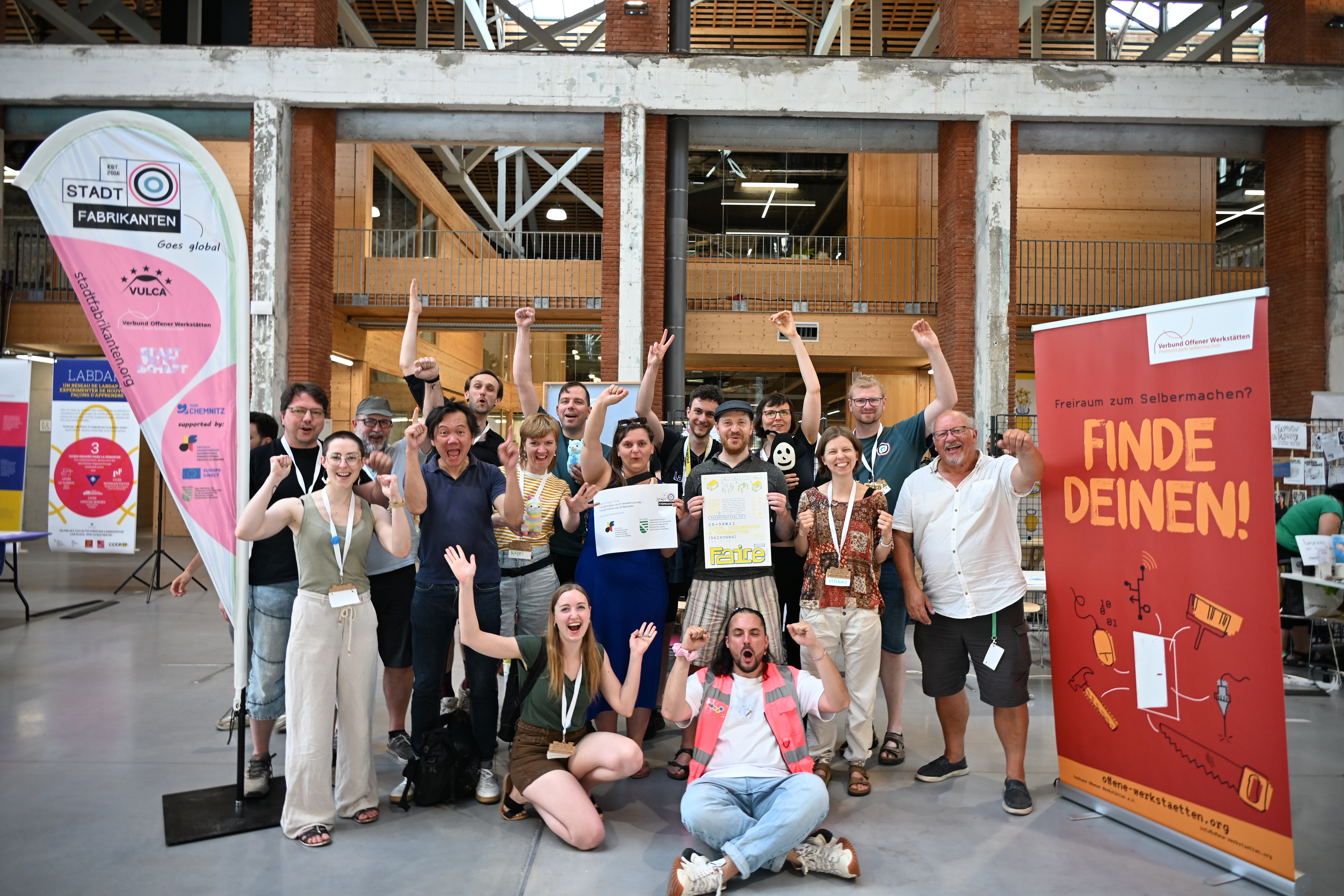
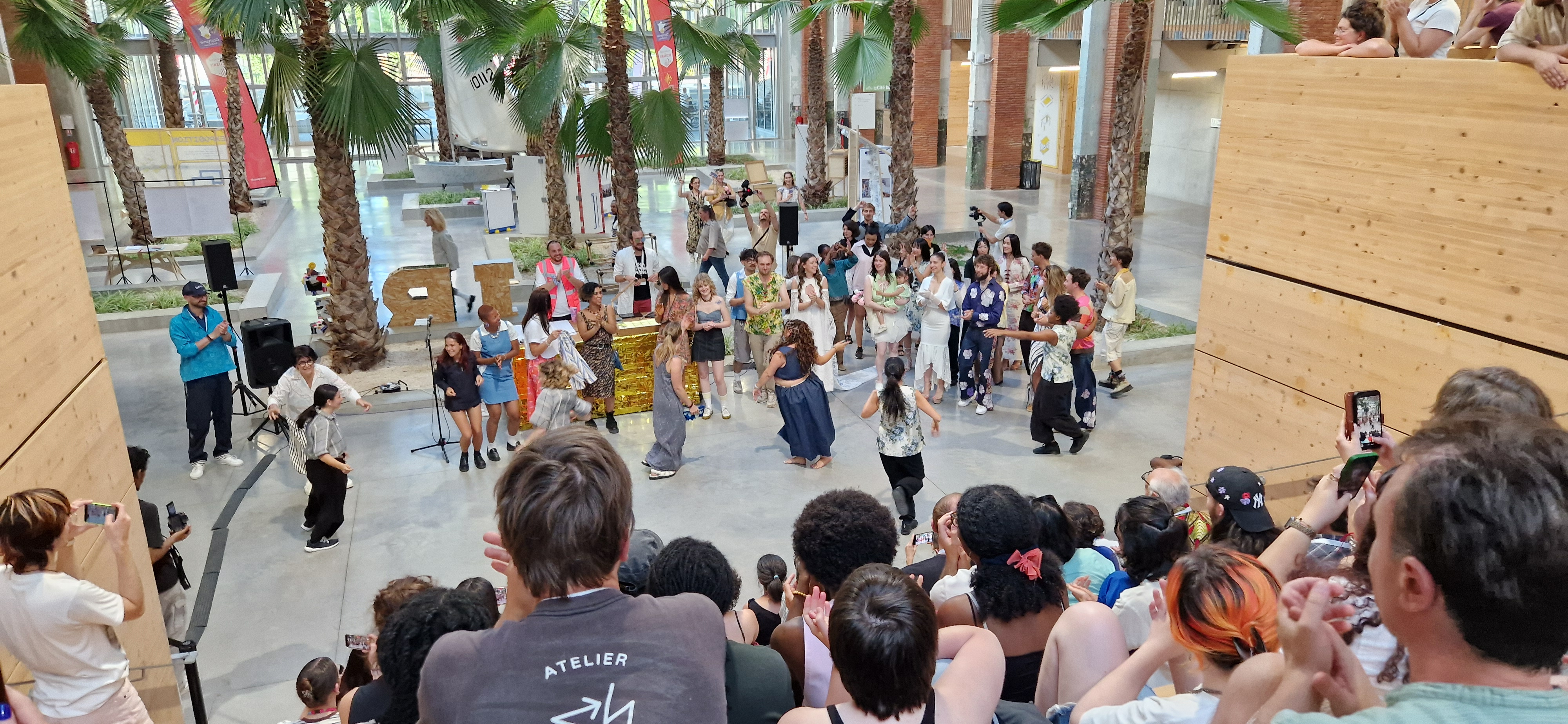
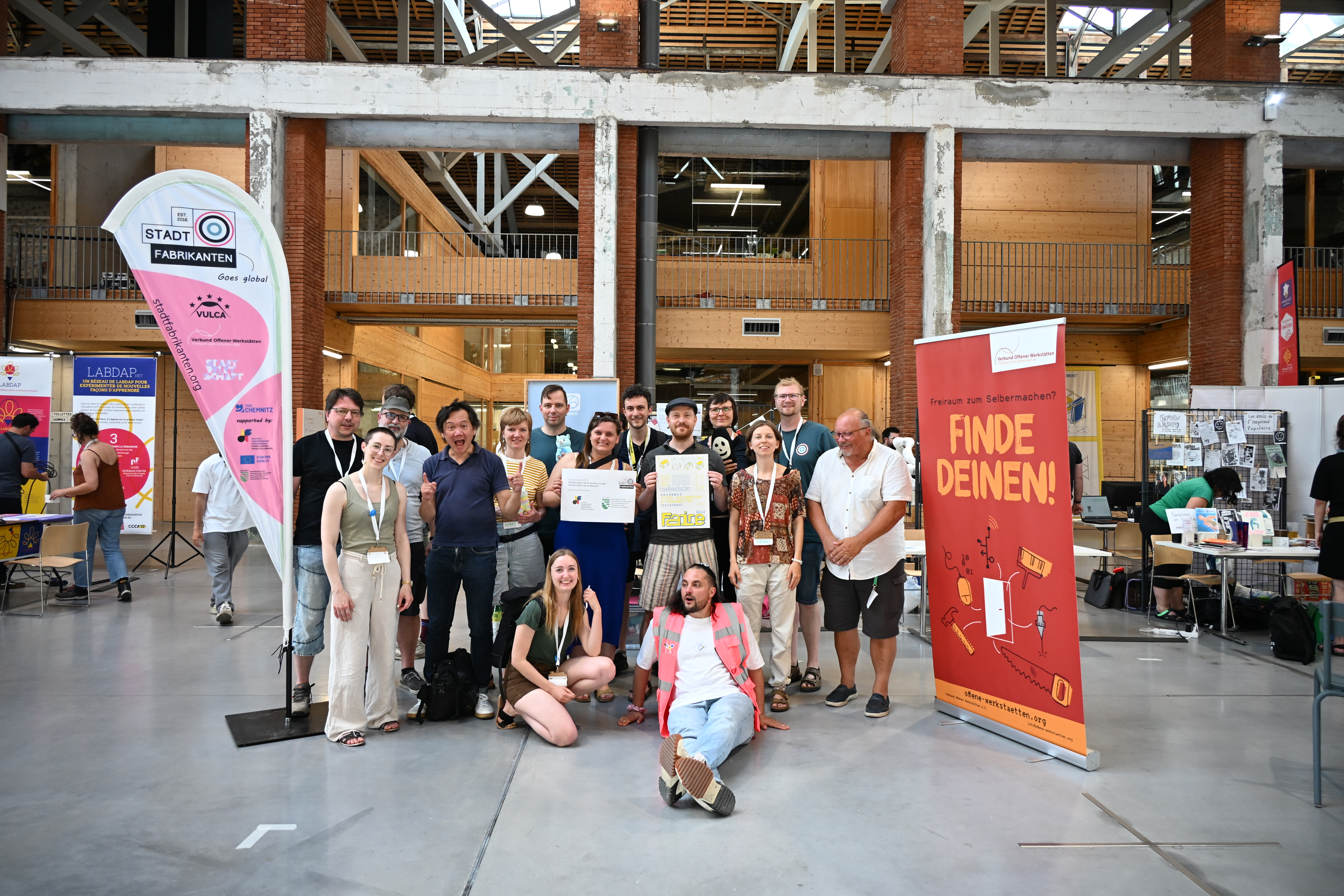
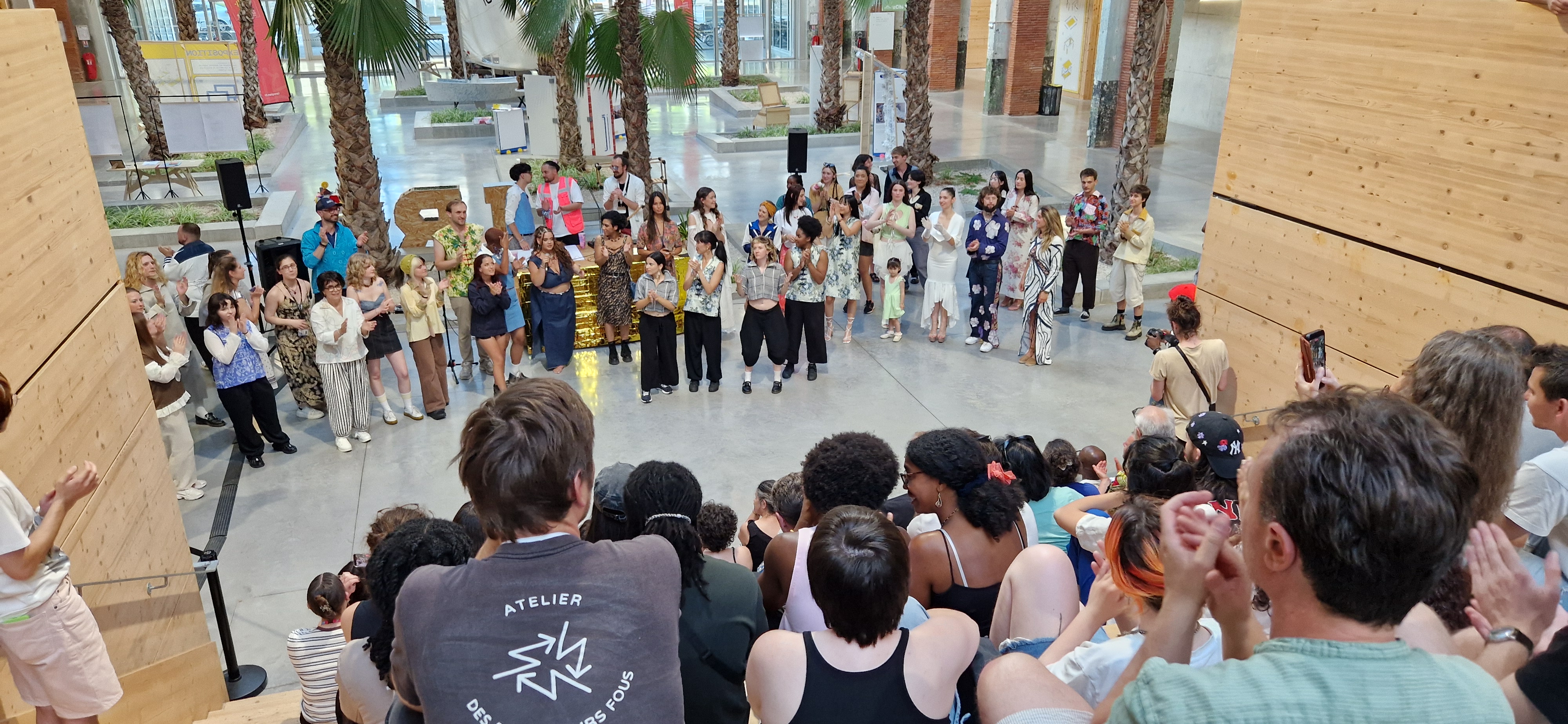
The day ended with a joint closing fashion show, a group photo of everyone involved and a relaxed evening out at a bar.
Sunday, 31 May
After some intense and eventful days, we set off on our journey home to Manzat on the morning of 31 May. My takeaway: our preparations fitted perfectly into the overall concept of the Faire Festival. Sustainability and the reuse of resources are a given in the maker scene. Through this project, I was able to expand my own knowledge and pass on valuable practical expertise. Above all, however, I came away with a strong shared sense that people across national borders are working hard to make a real difference to environmental and climate protection.
Mario's experiences
Inkscape and Open Source Software
I have been using the software called “Inkscape” for almost 10 years now. It is a widely used and very well-known piece of free and open-source software. Over the last few years, I have worked with it extensively in all sorts of ways. As well as posters, stickers, diagrams and sketches, various other applications have always been part of my workflow or have been added over time, namely the preparation, creation and customisation of files for laser cutting and vinyl cutting systems (including in our FabLab).
I have been contributing this knowledge to the global Inkscape community for many years, just as I constantly benefit from this community and promote it time and time again. To this end, I also develop extensions for the software from time to time that open up specific areas of application, and I regularly write documentation. I am therefore happy to pass on the knowledge I have gathered to inquisitive users and those with an interest in the subject. Among other things, you can find our self-hosted extension project called MightyScape.
During our trip, I was able to discuss Inkscape in connection with MightyScape with various people and gather helpful feedback, including in-depth discussions with Guillaume Bertrand from the Fablab at Les Fabriques in Besançon, who was already familiar with the project and told me about his requirements regarding compatibility with the so-called ‘Snap’ App Store for Ubuntu Linux. Inspired by this exchange, I used the long car journeys in between to tackle this problem.
At the FaireFestival
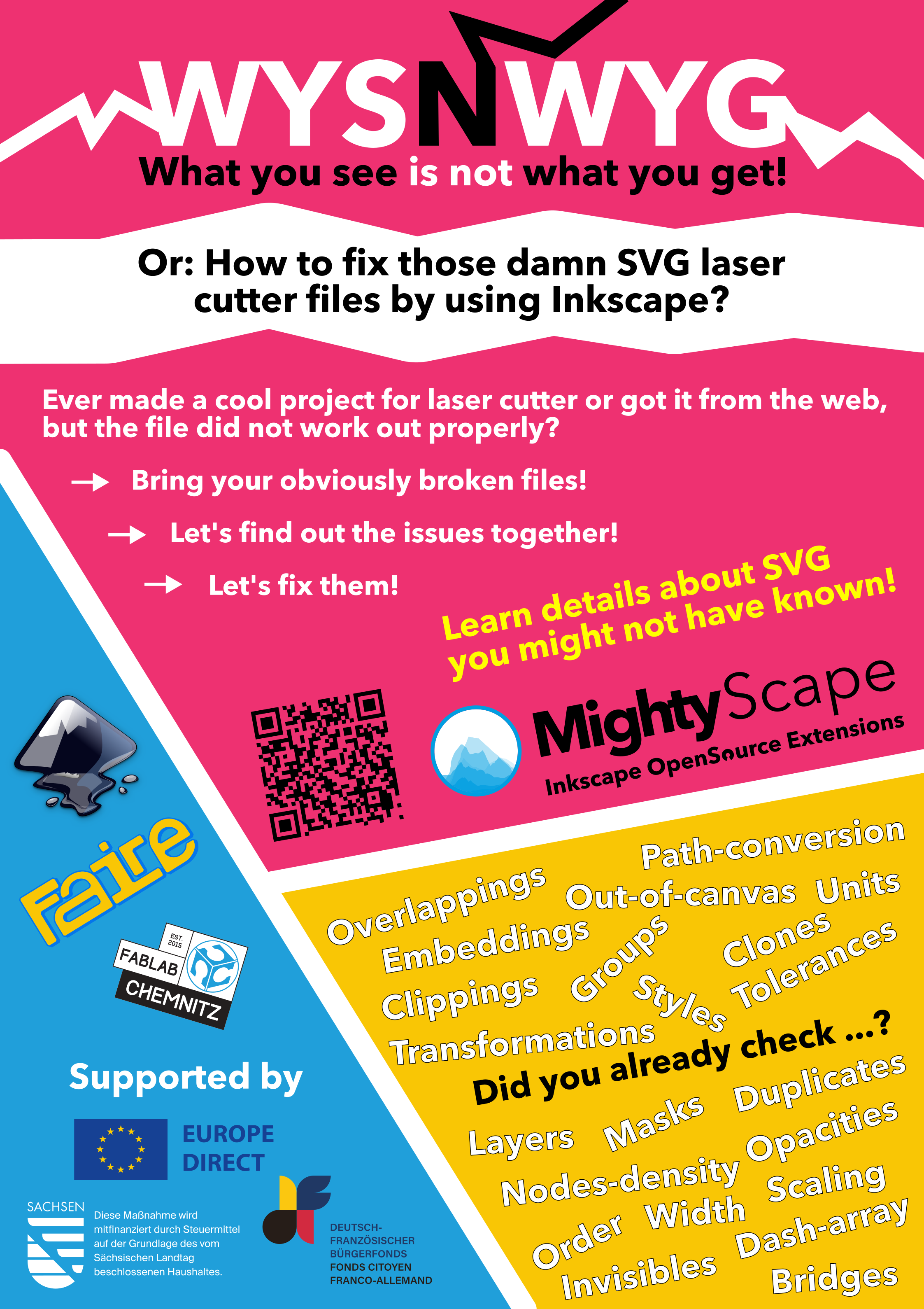
A workshop entitled “What you see is not what you get – or: How to fix those SVG laser cutter files using Inkscape” had been planned for the FaireFestival, which explored the topics of Inkscape and MightyScape in greater depth. The accompanying workshop announcement for the FaireFestival team read as follows:
Most people who regulary create jobs with a laser cutter (or similar acting machines like pen plotters, vinyl plotters, milling machines), have difficult problems while working on complex files for making a trustworthy laser job for precise cuts and engravings. And a lot of people work with SVG vector input to create these. In this session i will act as “doctor of applied vectology”. Together we analyse typical problems in your existing laser job inputs and i will show you how to fix them using Inkscape (with some plugins from our MightyScape extension collection). We will talk about the SVG file structure and strange things like clones, masked objects, style attributes, references, groups, layers, embedded images, duplicated lines, tolerances and a lot more. Please bring your obviously broken file projects and we will have a look to make it work! You are welcome to join with your own computer to replay things i show to you.
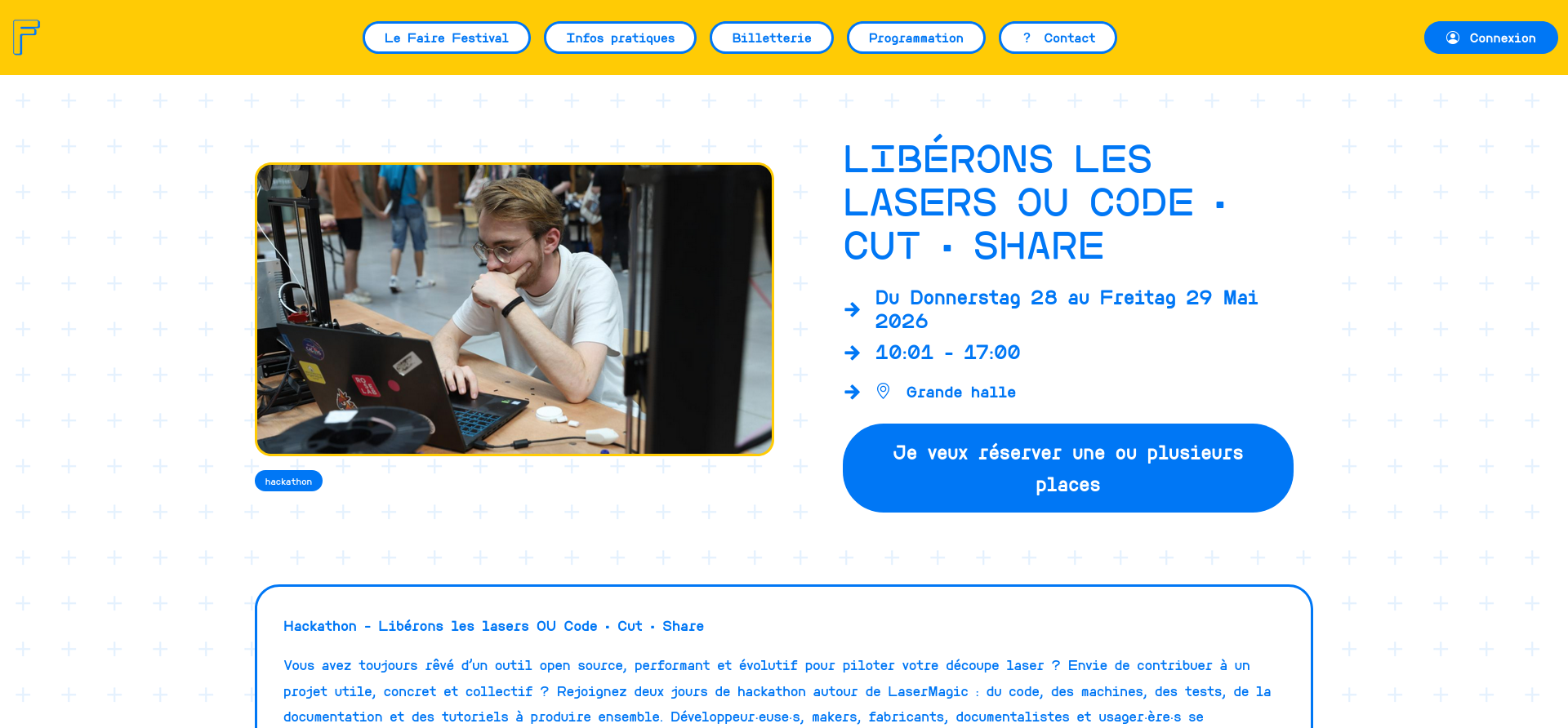
This workshop did not quite go as planned (namely, 1.5 hours on each of two days). Why did some of our workshops not go as planned? Due to the fact that the workshop wasn’t listed on the official programme website in advance – despite having been submitted to the RoseLab organising team – combined with faulty registration management on their website and on-site set-up difficulties (lack of space, tables, electricity, monitors and a noticeboard for flyers), the programme didn’t go ahead as planned for me and required some improvisation. Fortunately, a hackathon entitled “LIBÉRONS LES LASERS OU CODE • CUT • SHARE” was taking place at the same time, which also focused on Inkscape and was a perfect fit in terms of theme. This centred on the free software LaserMagic. The workshop content, translated:
Hackathon – Liberate Lasers OR Code • Cut • Share
Have you always dreamt of a powerful and scalable open-source tool to control your laser cutter? Would you like to contribute to a useful, practical and collaborative project? Take part in a two-day hackathon centred on LaserMagic: code, machines, testing, documentation and tutorials that we’ll create together.
Developers, makers, manufacturers, documentarians and users will come together to experiment, improve the tool and advance a shared, open-source project in the service of decentralised and collaborative manufacturing.
First objective: to create clear and practical resources so that anyone can install, use and improve the software. Second challenge: to test the tool and connect it to as many different laser cutting machines as possible, taking into account real-world use cases, configurations and user needs.
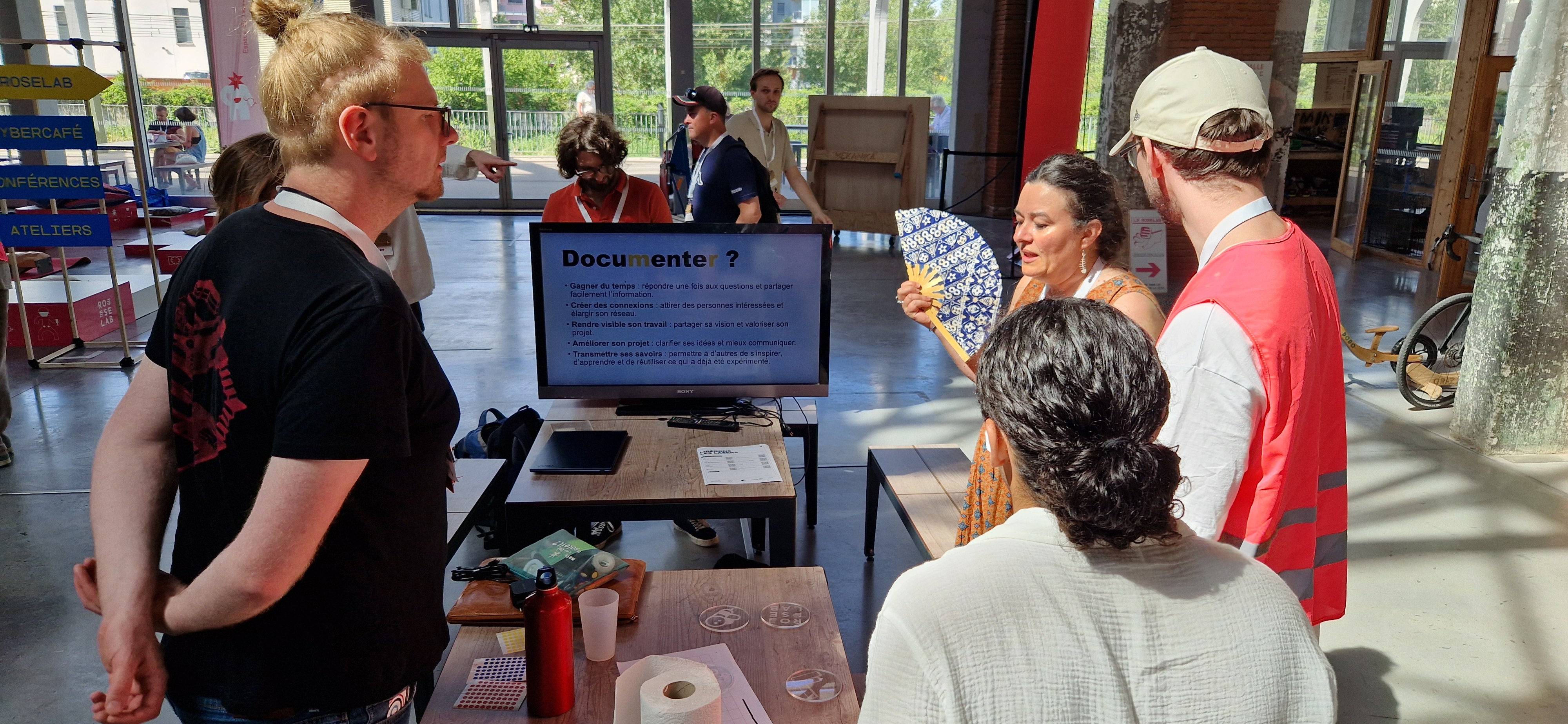
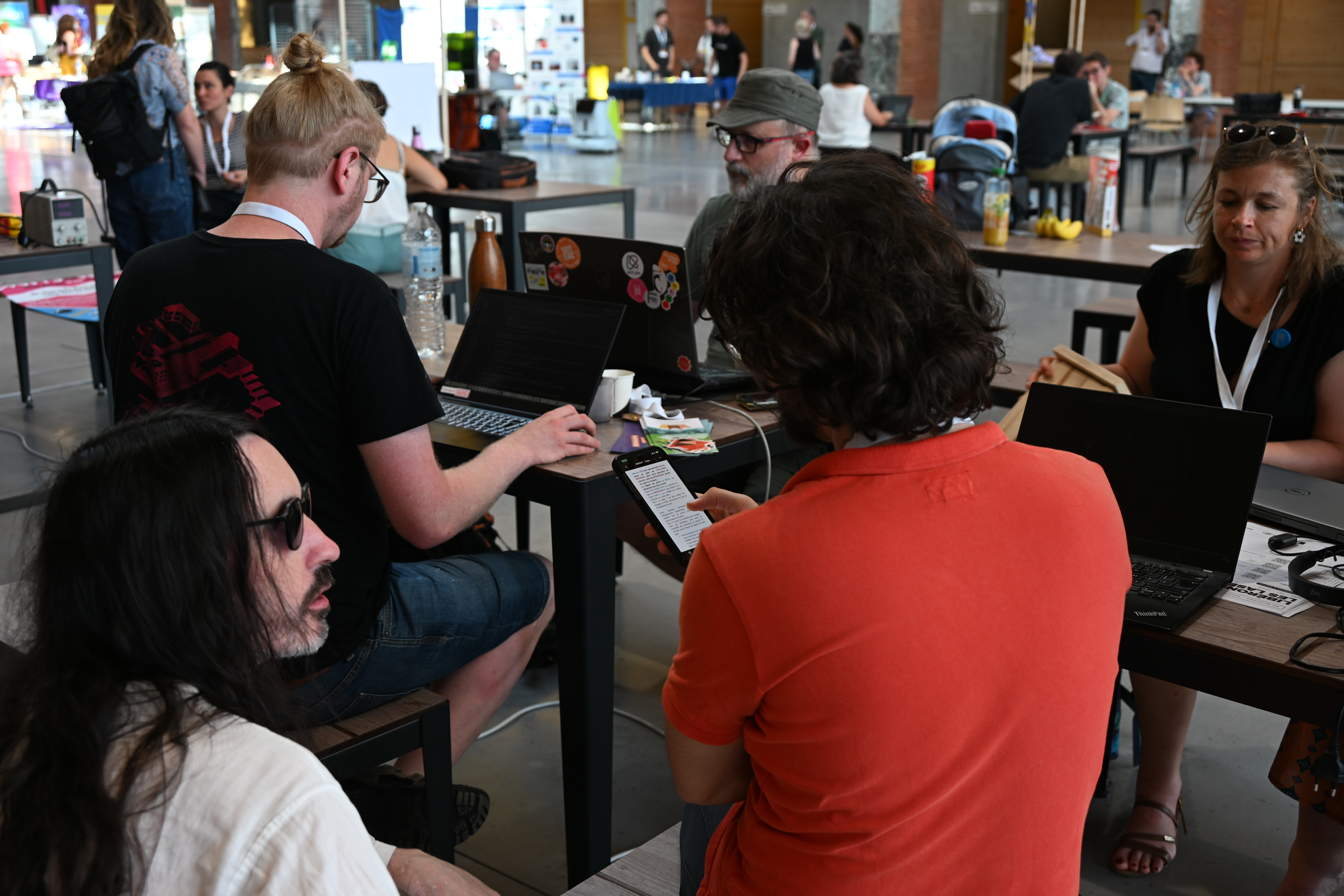
I was then able to drop in for a while on both Thursday and Friday and found a handful of like-minded colleagues and people to exchange ideas with. Among them were Benoit Forgette, the lead developer of LaserMagic, as well as people from Framasoft and movilab.org. Movilab is a publicly shared and widely accessible documentation platform for ‘third places’, containing tens of thousands of information pages.
I spent my time getting to grips with and trying out the “LaserMagic” project. I soon realised that I could contribute my long-standing knowledge directly to the community – which consists of software developers, documentation writers and machine operators. So, over the course of the two days, I provided plenty of feedback, which I recorded in the relevant hackathon minutes, and incorporated specific merge requests into the software project and its documentation. Among other things, I translated the entire project documentation into German and improved the visual appearance and stability of this Inkscape extension.
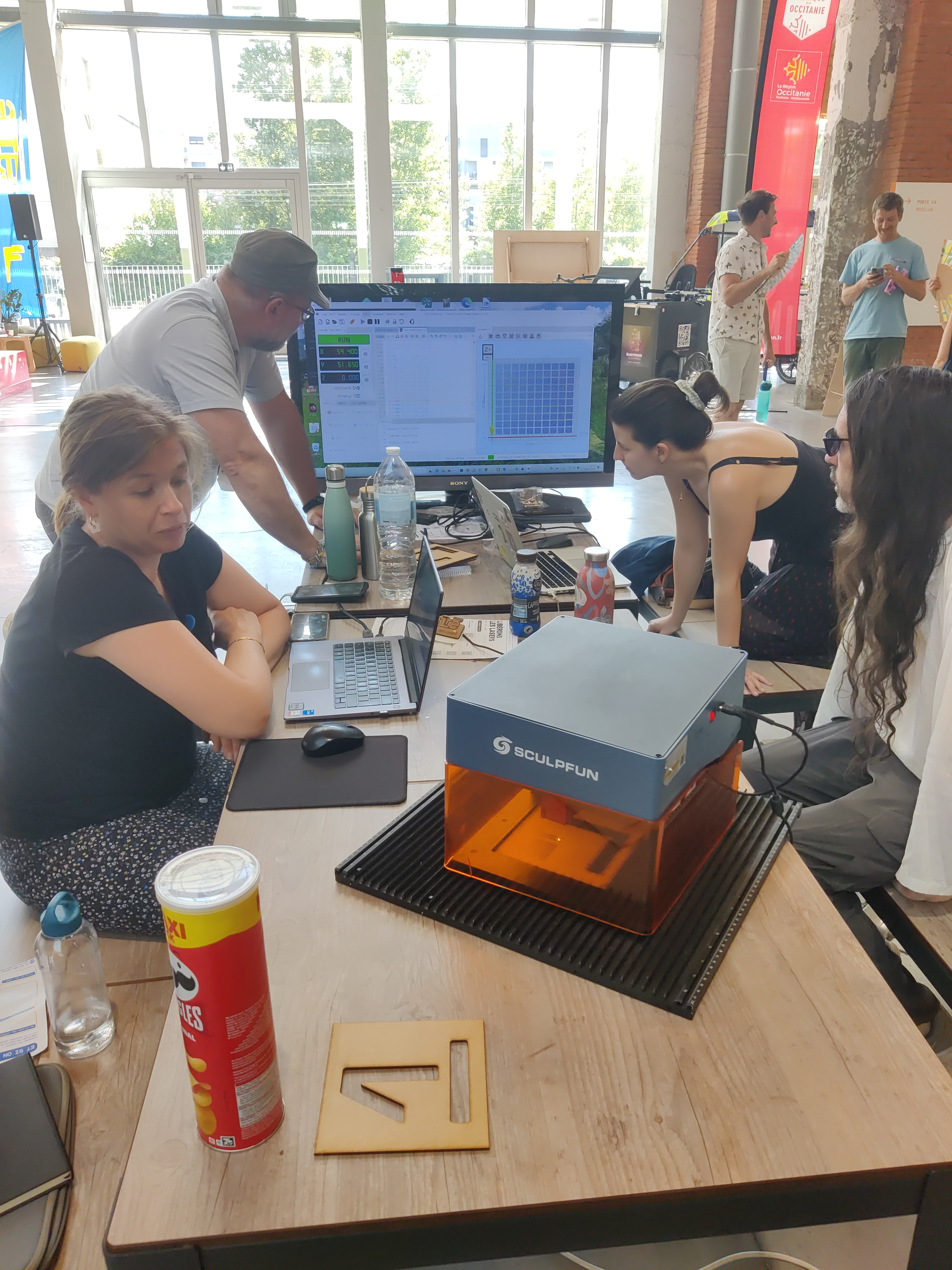
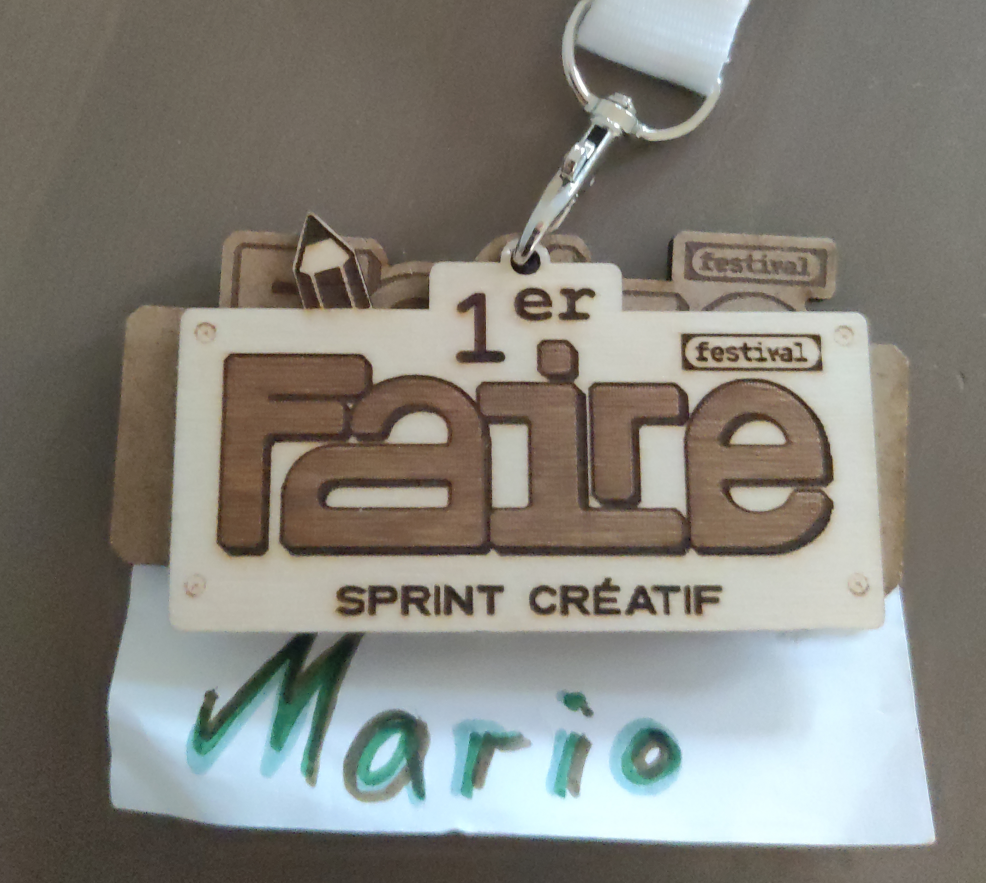
As a thank-you for taking part, Benoit gave me a “Sprint créatif” badge. It was drawn in Inkscape, prepared using LaserMagic and produced on the laser cutter on the spot. The quality is very good, and I’d like to say thank you again for that!
Despite all the teething problems, my overall impression of the FaireFestival is very positive: together, we have demonstrated Franco-German friendship through concrete, theme-based work, exchanged knowledge and ideas, and were thus able to learn from one another. In the process, we learnt about each other’s projects, problems and solutions, identified new avenues, and got a glimpse of – and radiated – a little bit of the future. I felt very much at home here.
Kati's experiences
Electronic music explained in simple terms
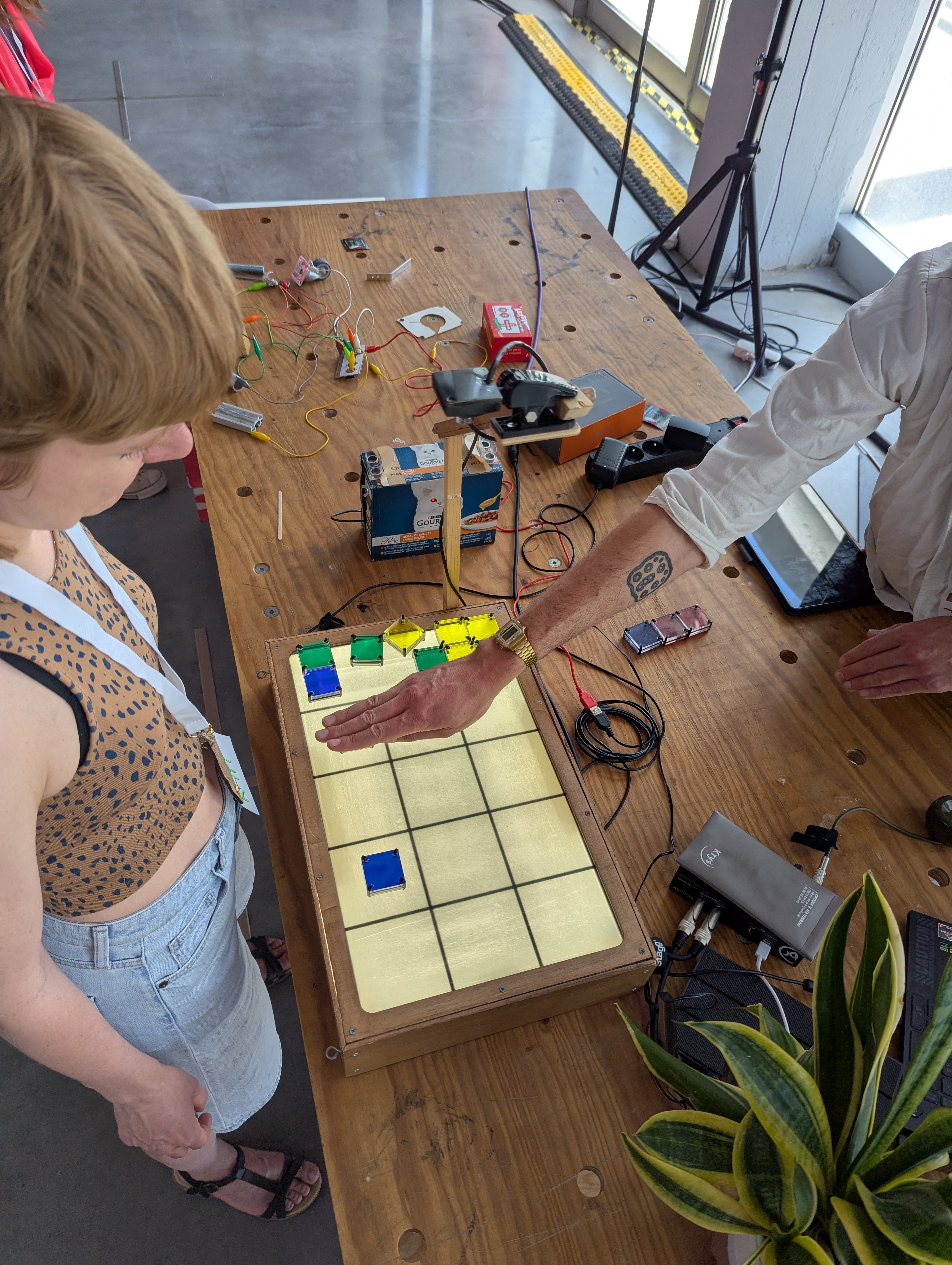
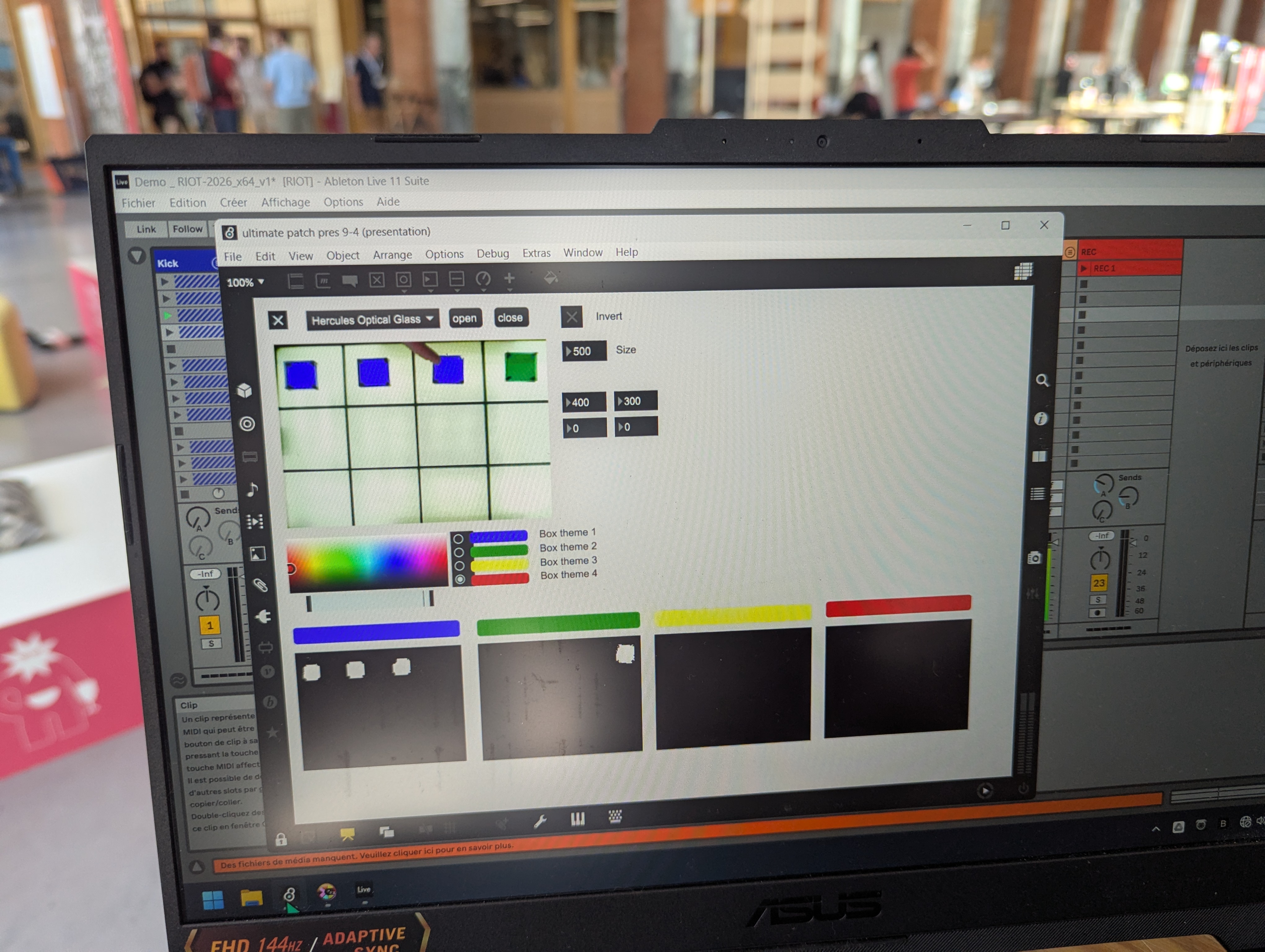
Once we arrived at the FaireFestival, we started by getting our bearings. There was so much to discover straight away, and I was quite ‘blown away’ at first. I didn’t know where to look first. Things sorted themselves out quite quickly, though, as I found myself drawn to the Doc Pixel stand. At first glance, it looked like a DJ playing music. I then noticed an interesting setup: on a sort of illuminated table, visitors could place different coloured stones onto a grid. Each grid block and each colour represented a specific sound or sample, which was played as it was placed. A camera could recognise which sound and which colour had been selected and play it back on the connected laptop. This opens up an enormous number of possibilities for combining samples, pausing them, adding new ones, letting them overlap, and so on. Just from the finished sounds and samples by Doc Pixel, you could tell that a musician was at work. I really liked how he invited people to create music themselves in a playful and accessible way. Lots of people wanted to give it a go themselves and see what happened.
I had Doc Pixel explain the whole thing to me, and he also showed me that you could even apply filters to create even more dynamic effects. You could ‘adjust’ these by moving your hand over a sensor. I was really impressed by how he combines technology, creativity and experimentation with his equipment. He also used it to clearly demonstrate how working with electronic music works. It’s also a brilliant way for children to gain an understanding of and access to this field.
Paper-making made easy
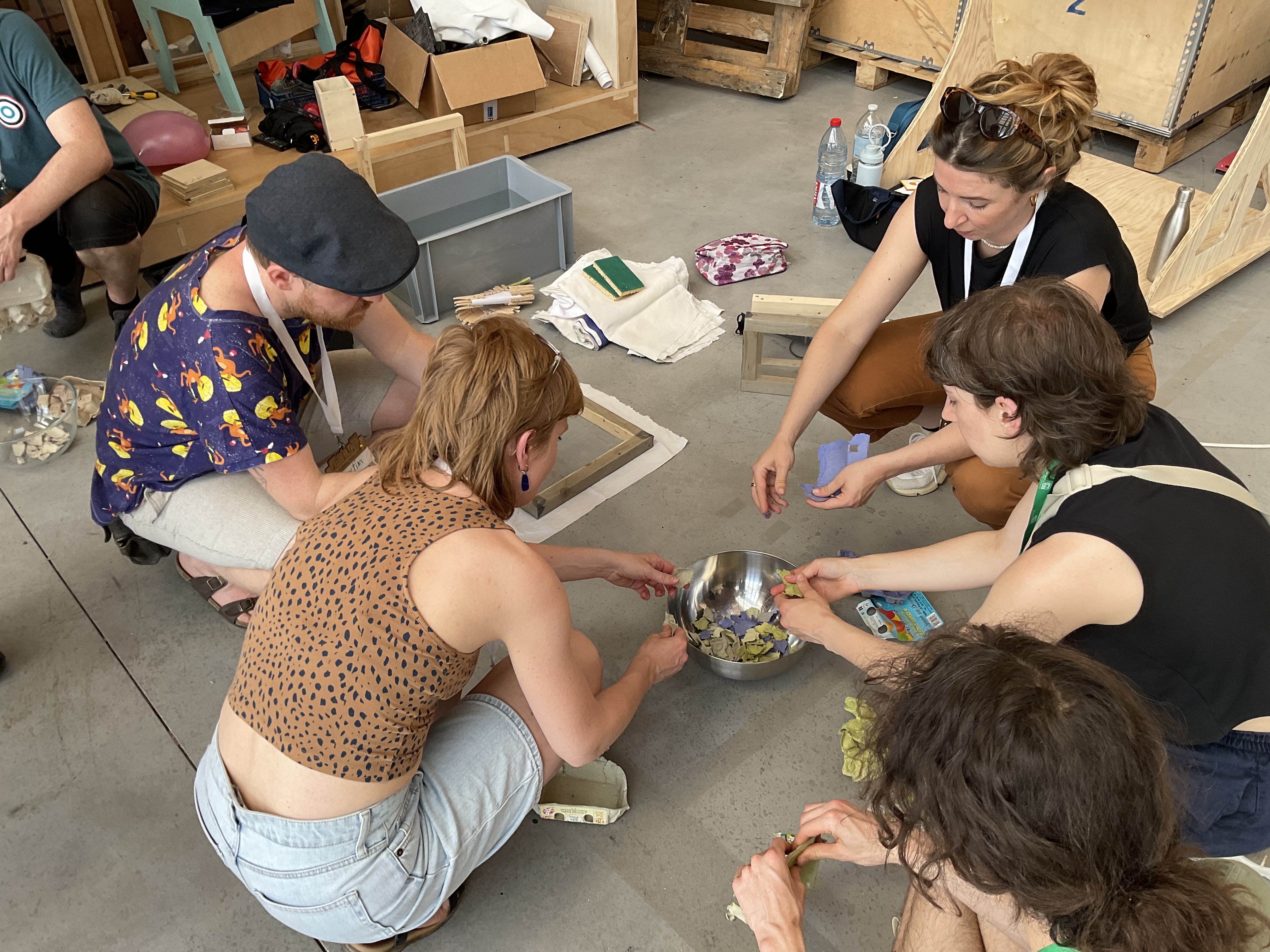
On the Saturday of the FaireFestival, I took part in the ‘PAPIER RECYCLÉ’ (handmade paper) workshop. There, we were shown how to make our own paper using egg cartons, water and a few simple tools, which can then be used for further projects such as printing or bookbinding. It reminded me of my graphic design degree, where we learnt bookbinding techniques, for example – but we didn’t actually make our own paper there. As someone with a professional interest in print and tactile qualities, I found it a wonderful experience to realise just how simple it actually is, and it was very appealing to discover how much enjoyment can be derived from this kind of craftwork. The paper we made was used the following day at the “Fanzine” workshop – a lovely cycle where we worked hand in hand with one another.
Martin's experiences
Workshop - Painted Light
France – a country renowned for its diverse tradition of painting and, in particular, for subversive innovations in this field. Take, for example, the emergence of Impressionism, which gave rise to entirely new depictions of nature and new ways of seeing. Kati Hollstein (communication designer) and I, Martin Lucas Schulze (artist), wanted to build on this supposed French enthusiasm for innovation in painting.
Building on this premise, we wanted to create an offering that, whilst integrating with the largely technology-focused programme of the Faire Festival, would at the same time present itself as refreshingly different and less tech-heavy than visitors might have expected. Another important aspect was the integration of environmental protection. Particularly in a country like France, which is increasingly struggling with heatwaves and water shortages, it seemed sensible to us to include an upcycling element in our concept.
Whilst studying art, I once came across a painting technique which, in the context of this project, I thought might surprise people who do not constantly engage with the possibilities of painting. In this technique, oil paint mixed with what is known as ‘paint butter’ is applied using broad, coarse brushes. This enhances the lustre of the thick paint whilst also improving its spreadability. The result is reminiscent of the grooves on a gramophone record, which shimmer differently depending on the angle of the light and the viewing angle – depending on the direction in which the brushstroke was applied. In principle, this painting technique allows you to ‘paint’ light and create interesting optical effects in a very simple way. My hunch proved correct: on the one hand, visitors were thrilled by the artistic possibilities; on the other, they were unfamiliar with this technique.
At the Faire Festival, we combined painting techniques with the use of second-hand wooden panels that we found on site at the Roselab. Kati and I first primed them and then, together with the workshop participants, used them as canvases. In this way, we were able to live up to our commitment to upcycling.
Armed with our concept and the materials provided for it, we organised our workshop in consultation with the organisers of the Faire Festival. This proved difficult at first, as technical issues meant that none of our workshops were visible to visitors on the website. We were therefore concerned that no one would even find out about what we were offering, as it could easily get lost amongst the wealth of different events. Further difficulties arose from the fact that the Faire Festival was taking place in a government building. It was consequently difficult for the organisers to coordinate with the building management regarding where, how and what could take place at such a security-sensitive location. After some back-and-forth, however, we were able to organise everything necessary so that the workshop could go ahead the following day.
Kati and I were given access to the Roselabs ceramics workshop. This room had a ventilation system, which was essential for our purposes, as our project would generate a considerable amount of odour. We prepared the room by covering the floor and parts of the walls with scrap materials to prevent the paint from staining them. We then laid out the materials and tools. By this point, we had already reckoned that nobody might turn up and the workshop might not go ahead. At this stage, however, we must mention our wonderful team. Whilst we were preparing the room, the rest of the team was actively busy promoting our workshop. They pulled out all the stops: there were announcements over the microphone, people were approached in person, and a poster was even designed by hand on the spot. With the help of a special inkjet printer, which another exhibitor at the Faire Festival had kindly made available to us, the design was then reproduced.
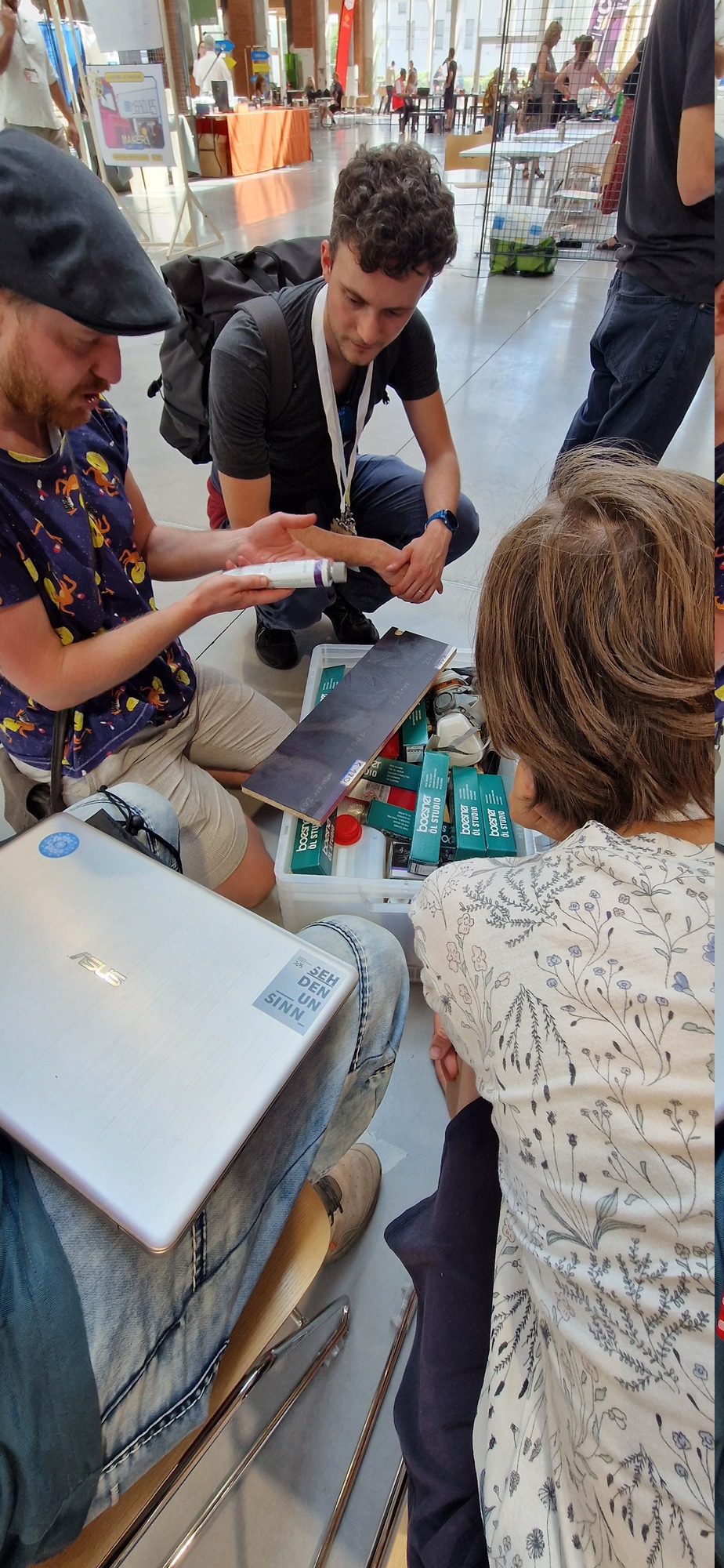
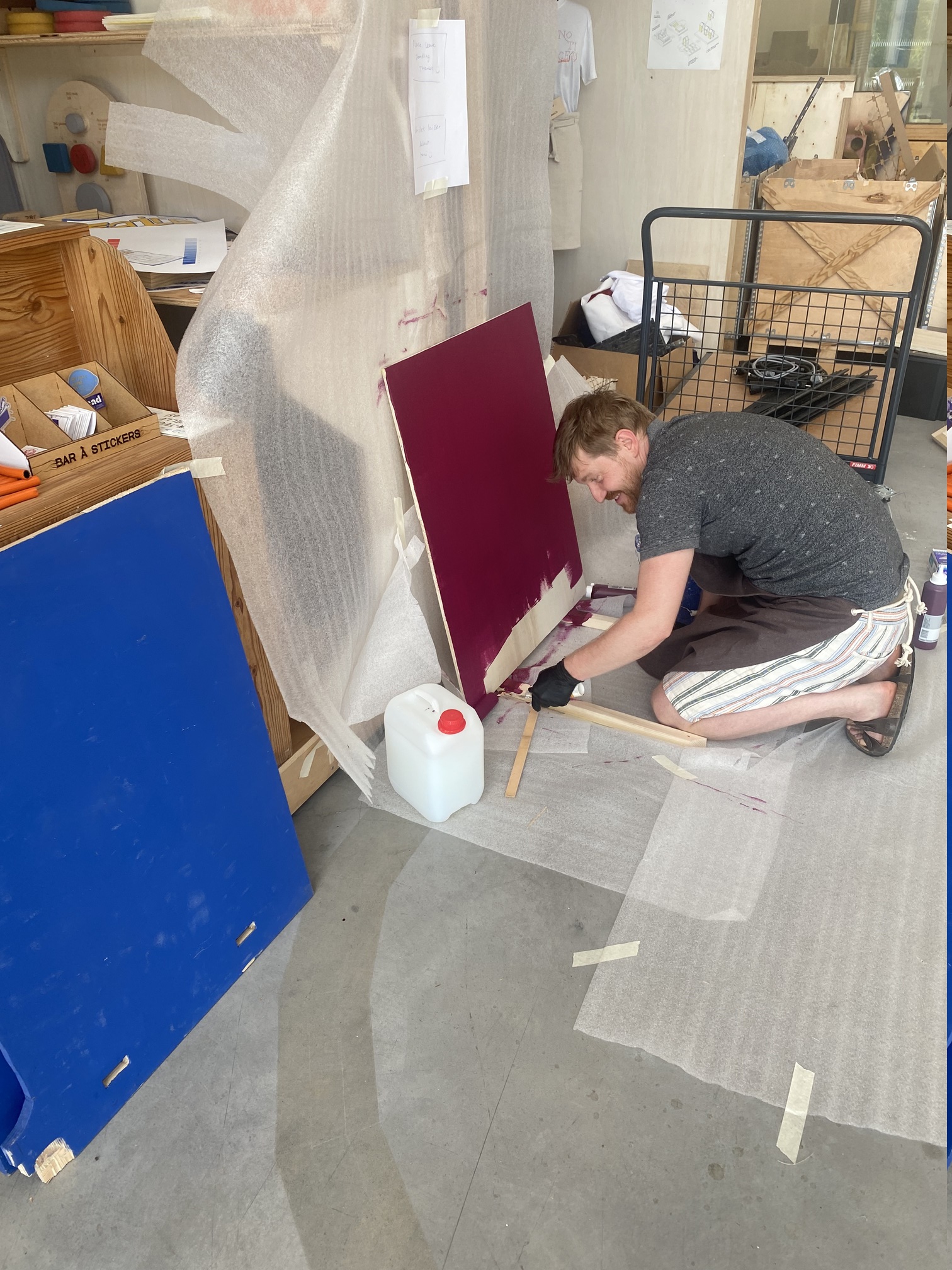
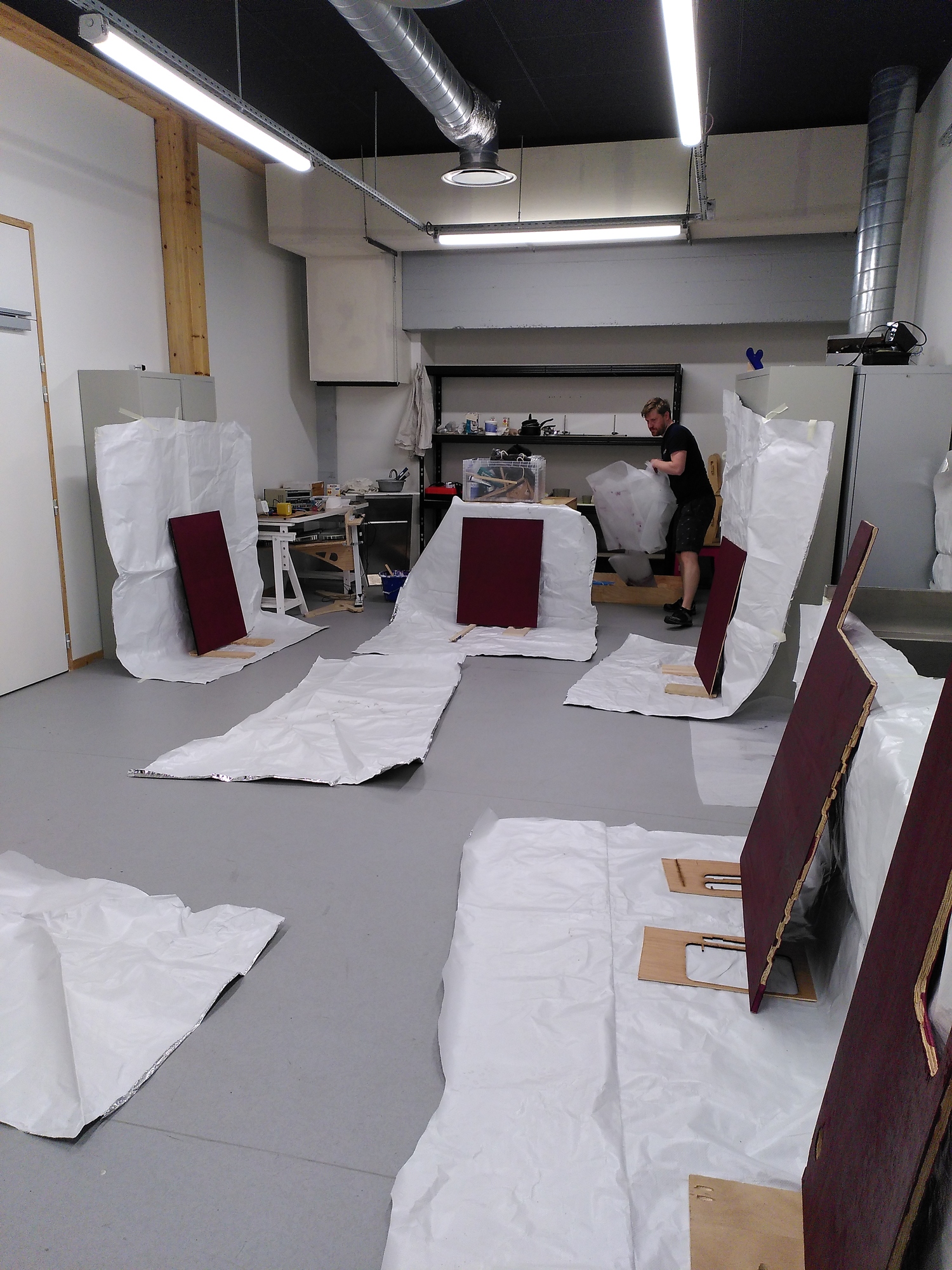
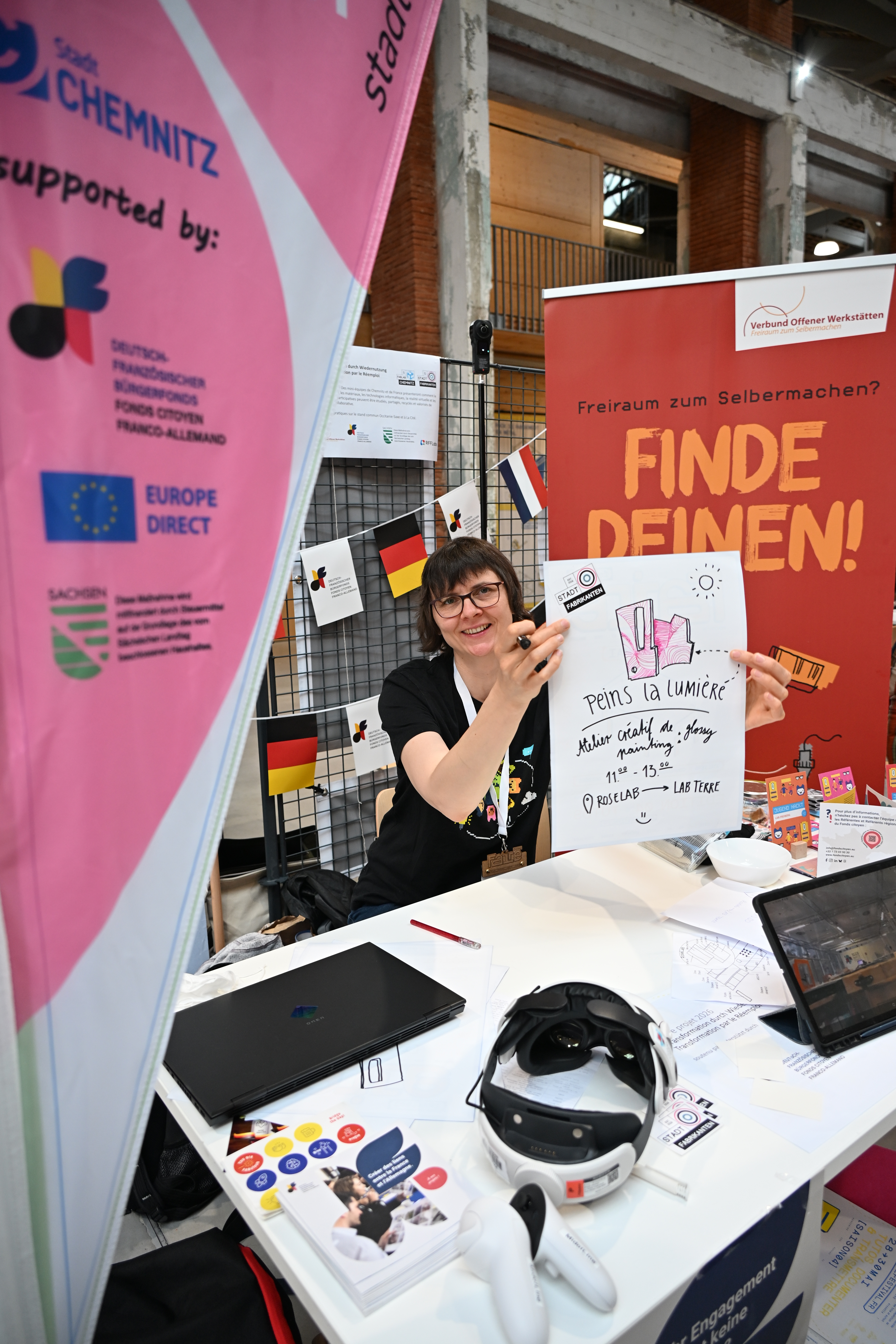
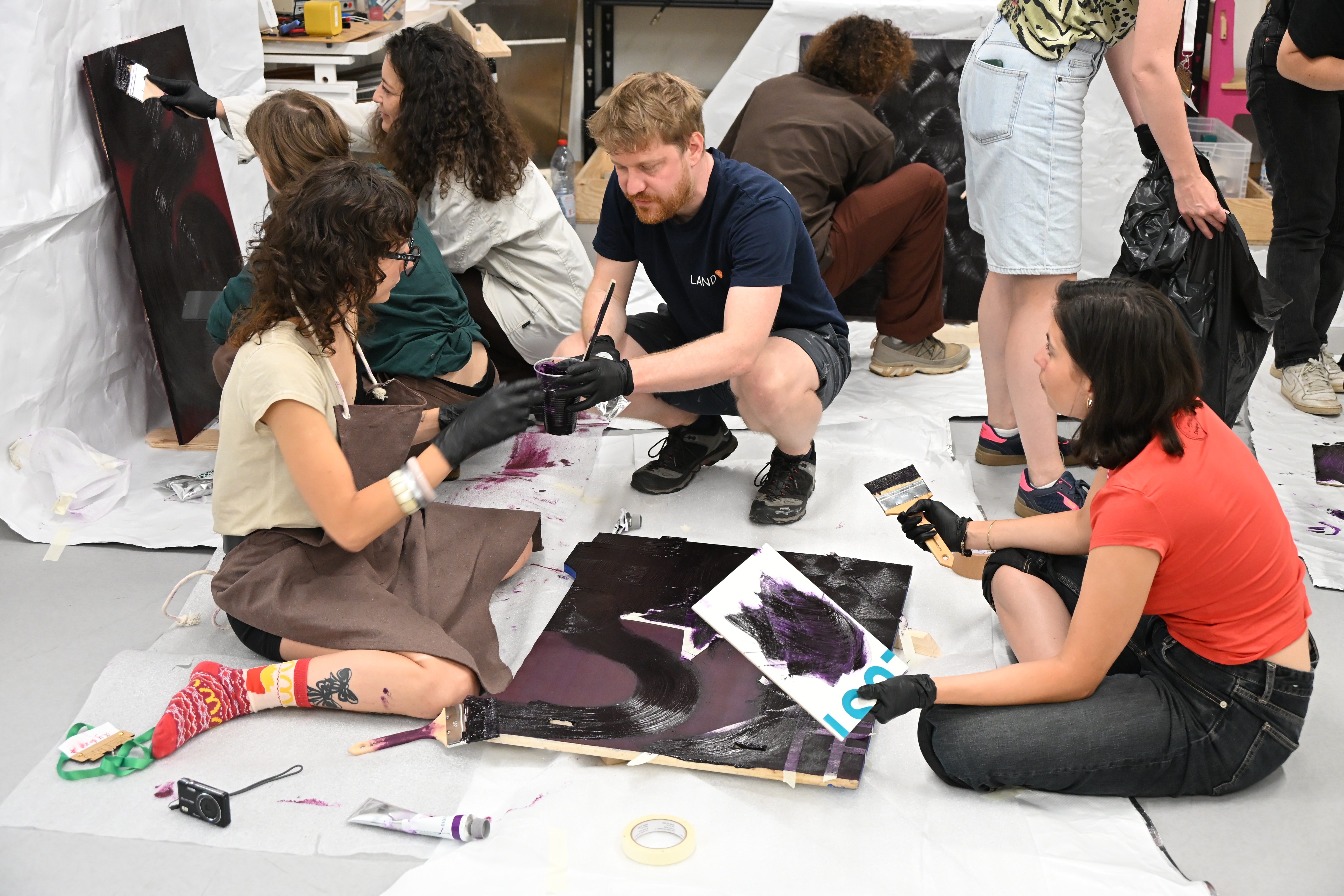
And so it came to pass that our workshop places were eventually fully booked, and we even had to turn away further interested parties later on.
The workshop itself then took place in a relaxed atmosphere. Among the participants were children with their parents, as well as a few teenagers and young adults. Many of the participants were able to get to grips with the painting technique straight away, and I was amazed at how intensely some of them engaged with it.
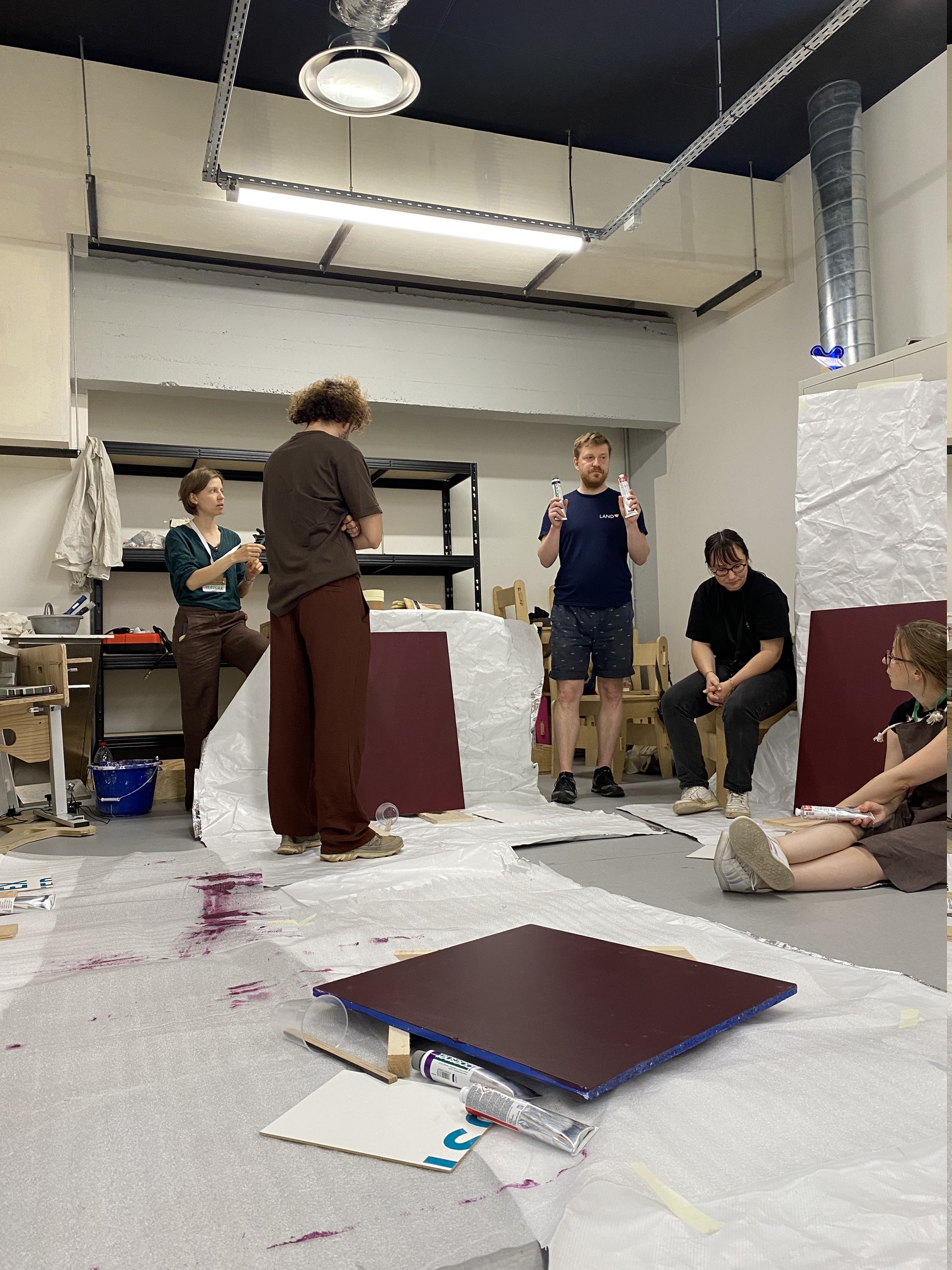
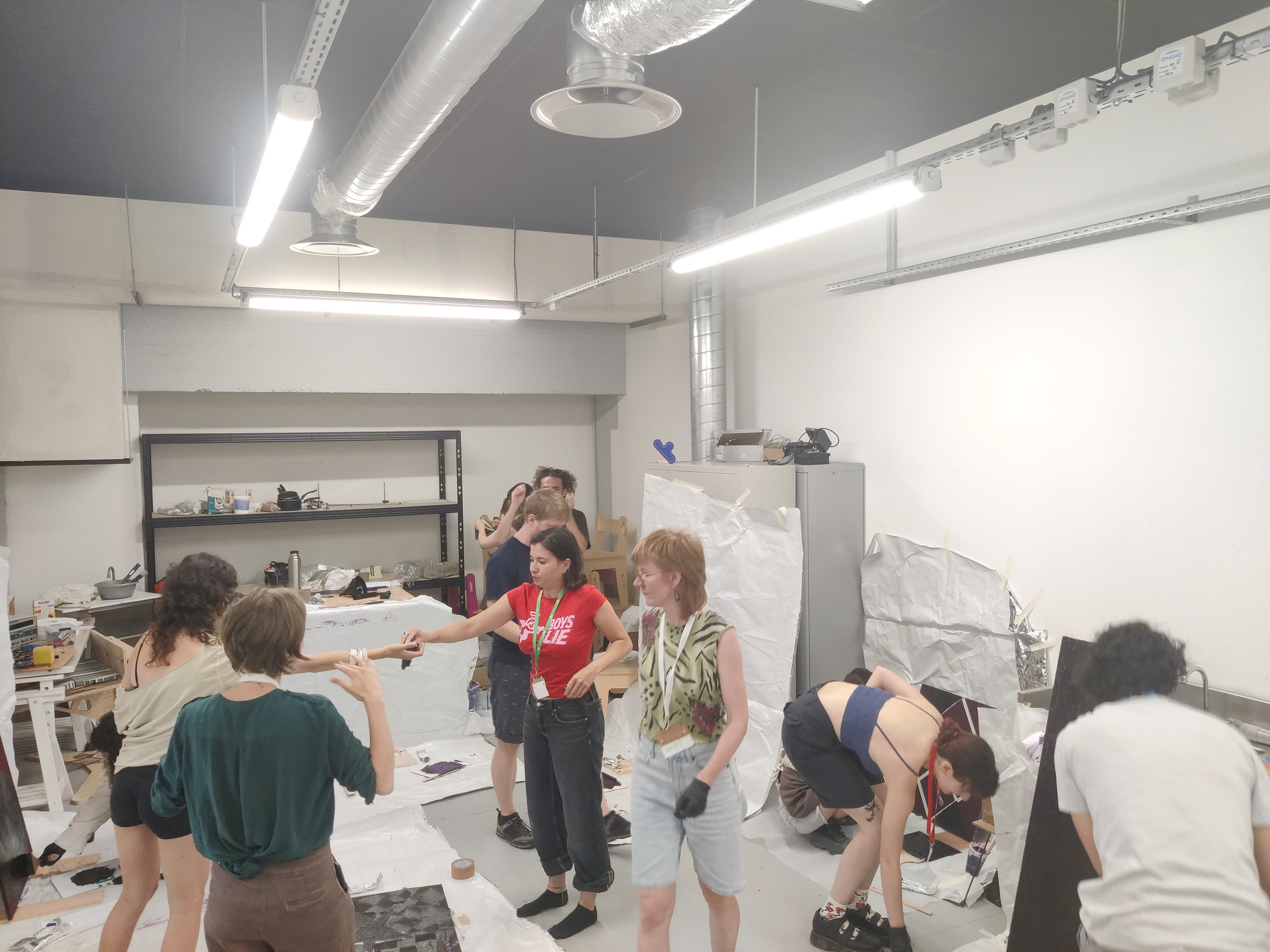
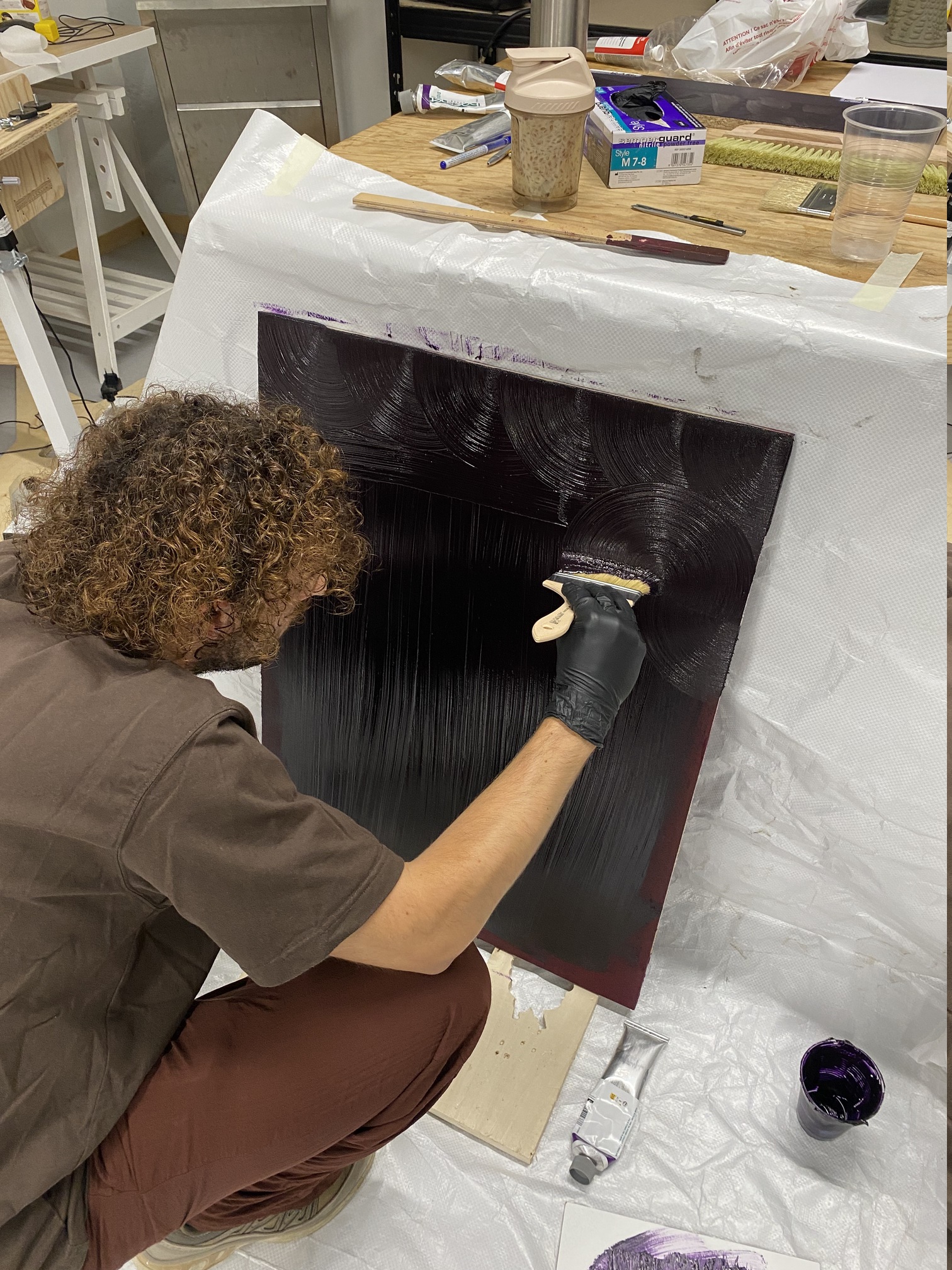
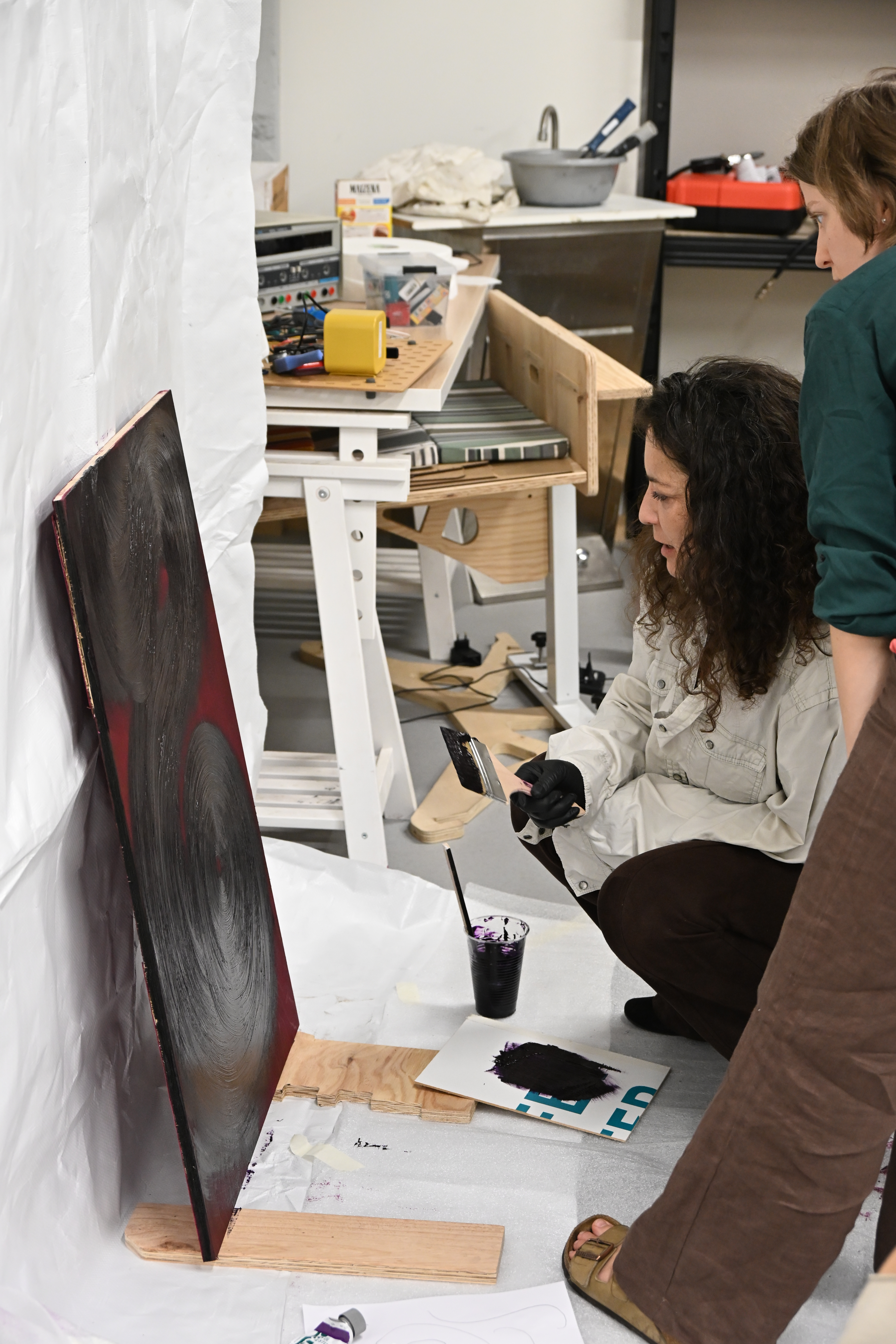
I was equally surprised by how little hesitation the participants showed, even though there was a very real risk of irreparably staining their clothes with paint, despite the aprons that had been handed out. It is worth bearing in mind that the participants had had very little time to get used to this particular form of painting.
There were no major difficulties with communication either. We were particularly able to rely on our interpreter, Veronika, during the technical briefing. Furthermore, both we and the participants generally had a sufficient command of English to be able to communicate with one another.
The participants were then able to leave the pictures they had created in a sheltered place to dry. The drying time was at least three days. It would be interesting to know whether any of the participants collected their pictures later on. However, we have no information on this.
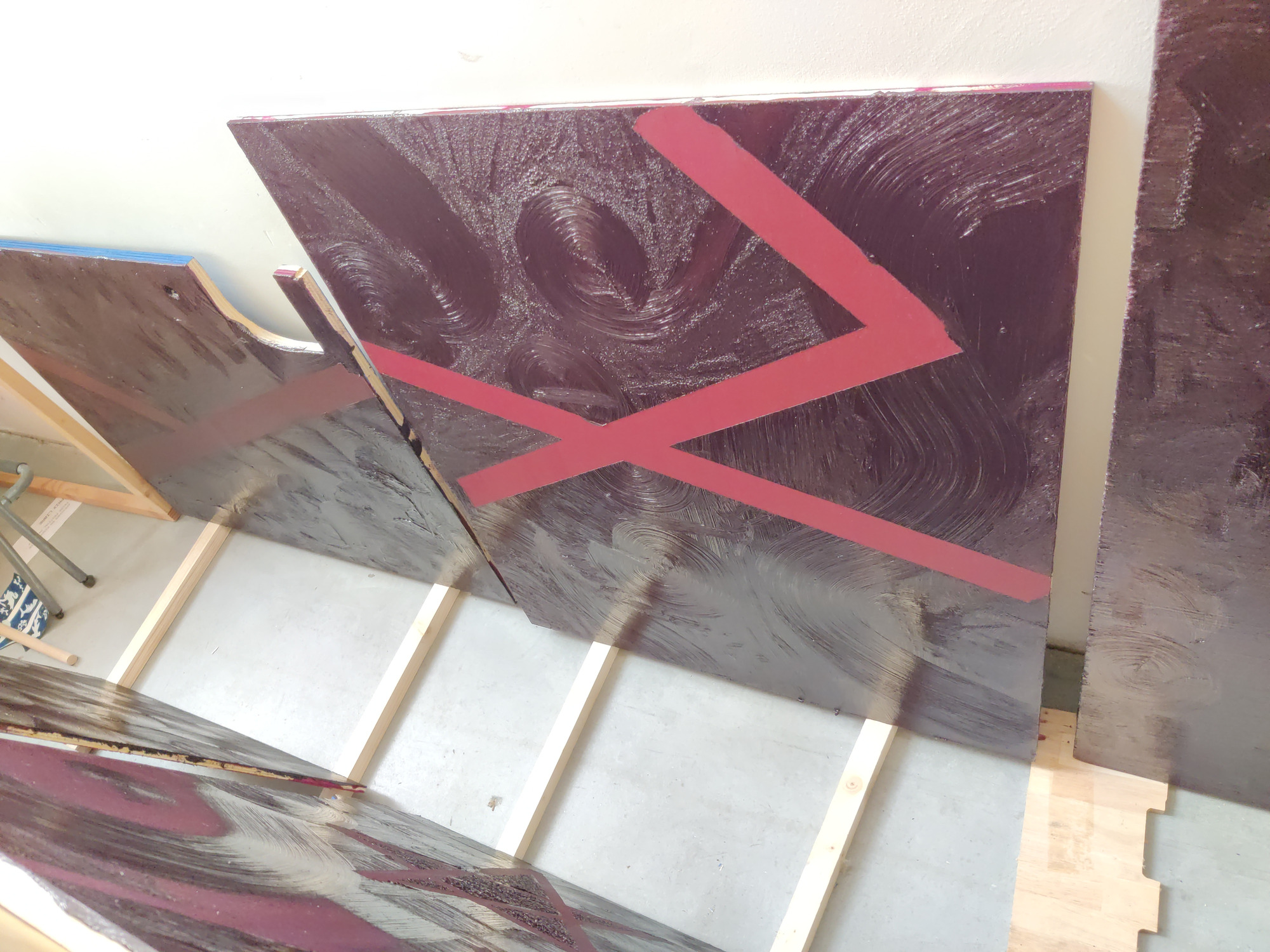
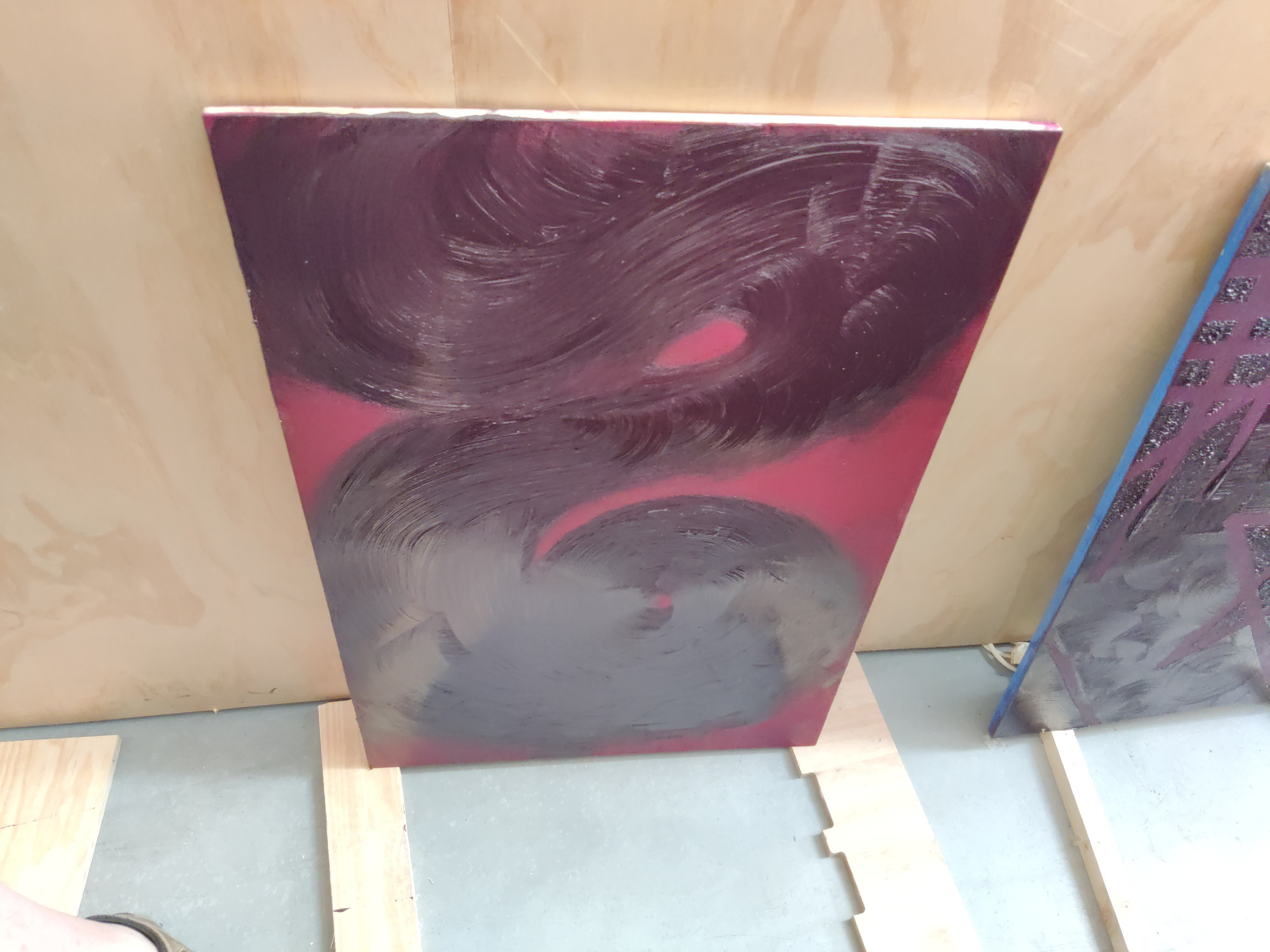
All in all, the workshop was a very enjoyable experience for everyone involved. Kati and I were able to gain valuable experience in organising and running a workshop abroad. It was particularly lovely to see that our concept, which had seemed a little unusual at first, met with such interest and enthusiasm.
Toni's experiences
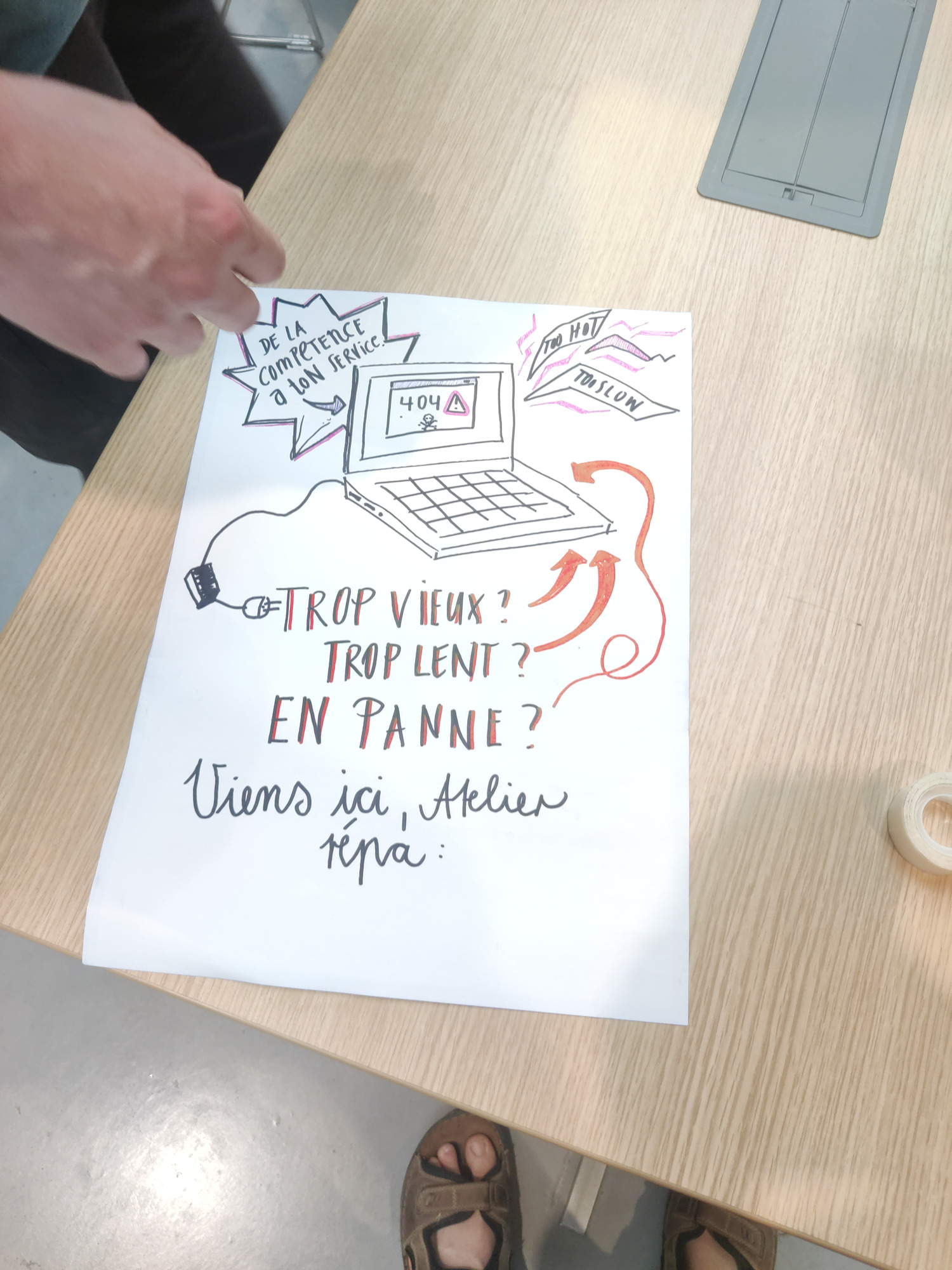
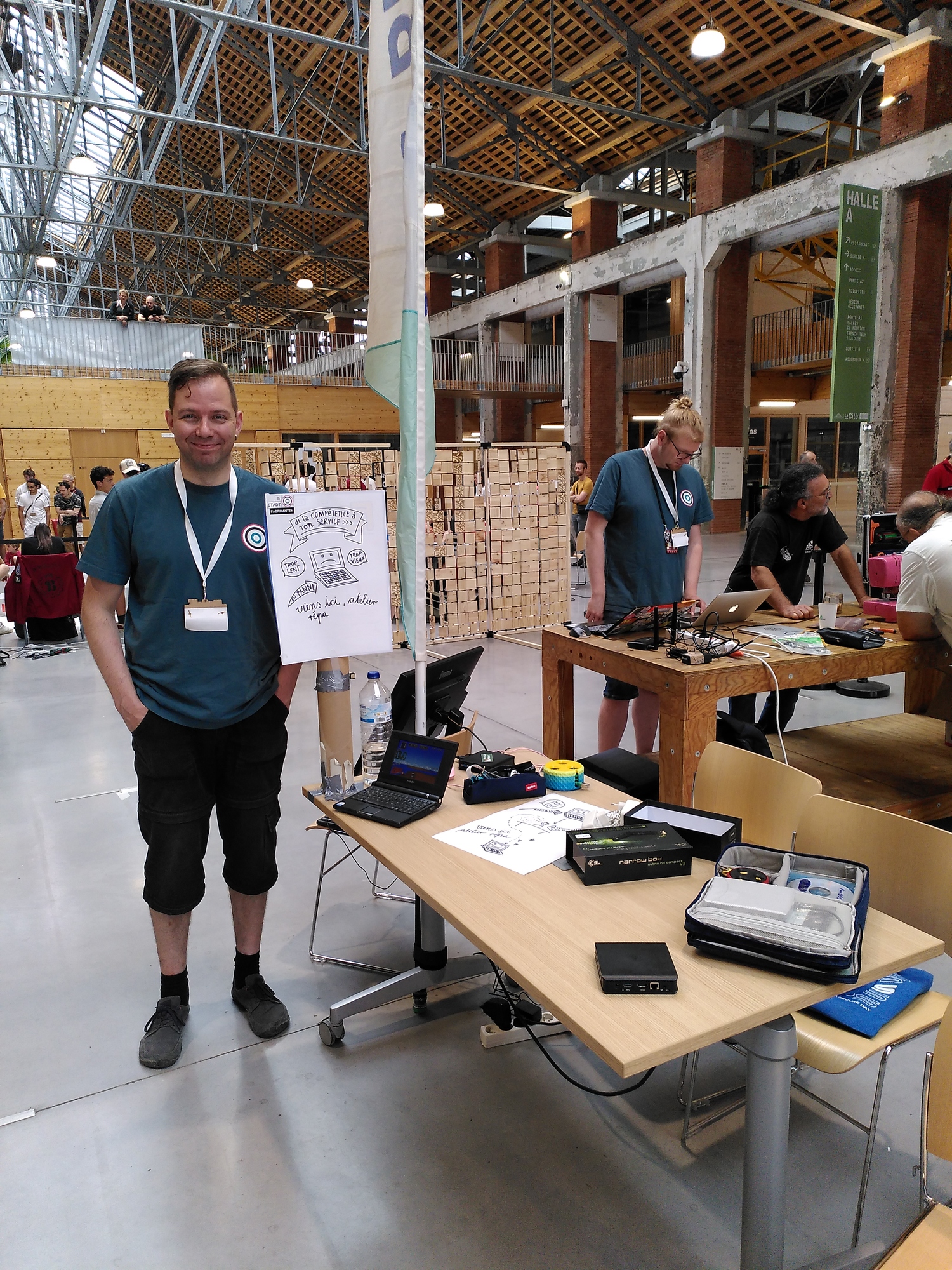
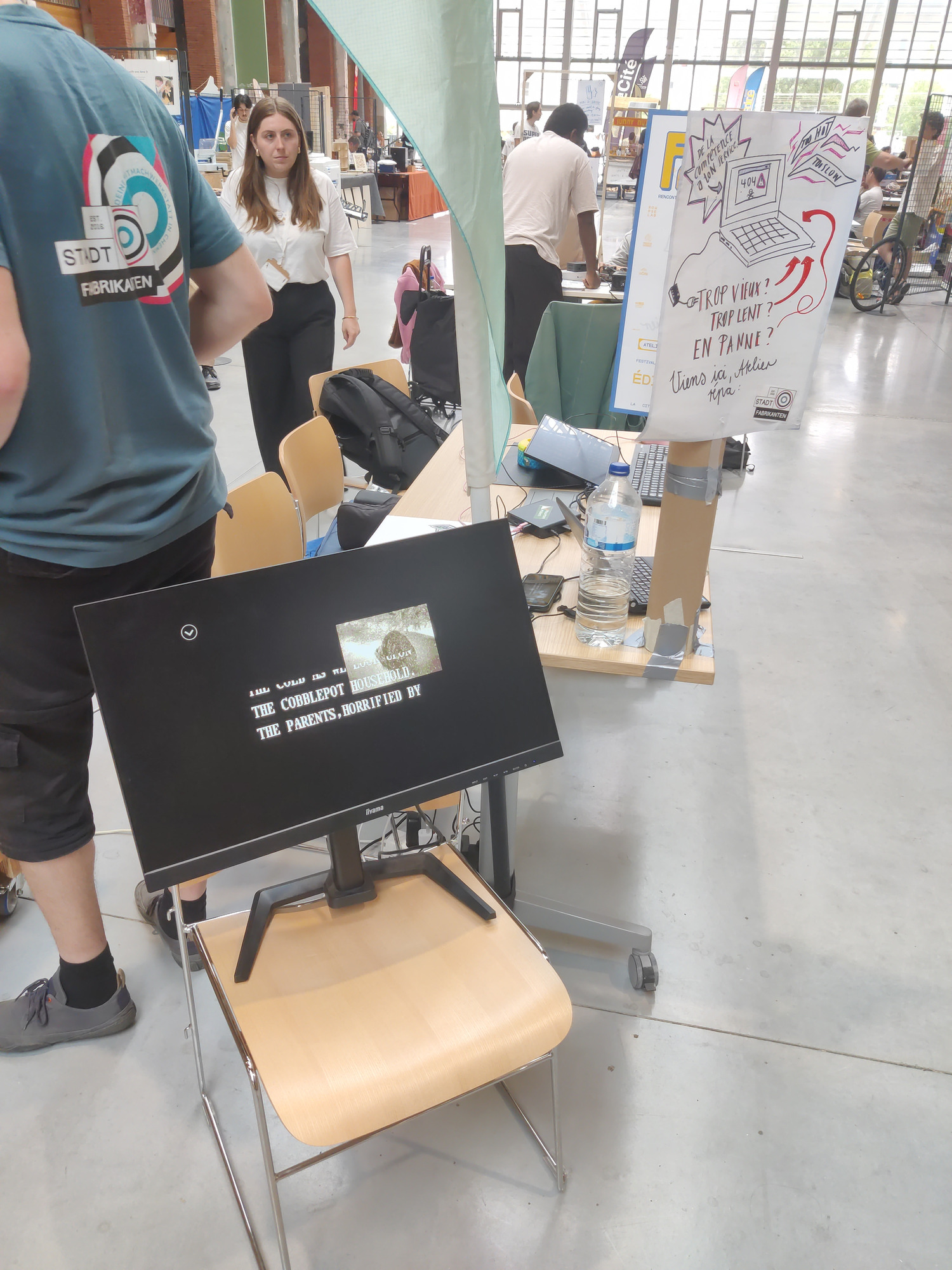
Too old? Too slow? Broken? Bring your broken or outdated equipment in for repair
Between the DIY vibe and the food, I also had some exciting repair projects to tackle. Here’s a quick recap.
Before we even got started, we had to prepare USB drives and pre-install software on the mini-PCs. Together with Veronika, who handled the translation and language coordination, I worked with Anja—or rather, Anja worked with me—to design a workshop announcement poster in French.
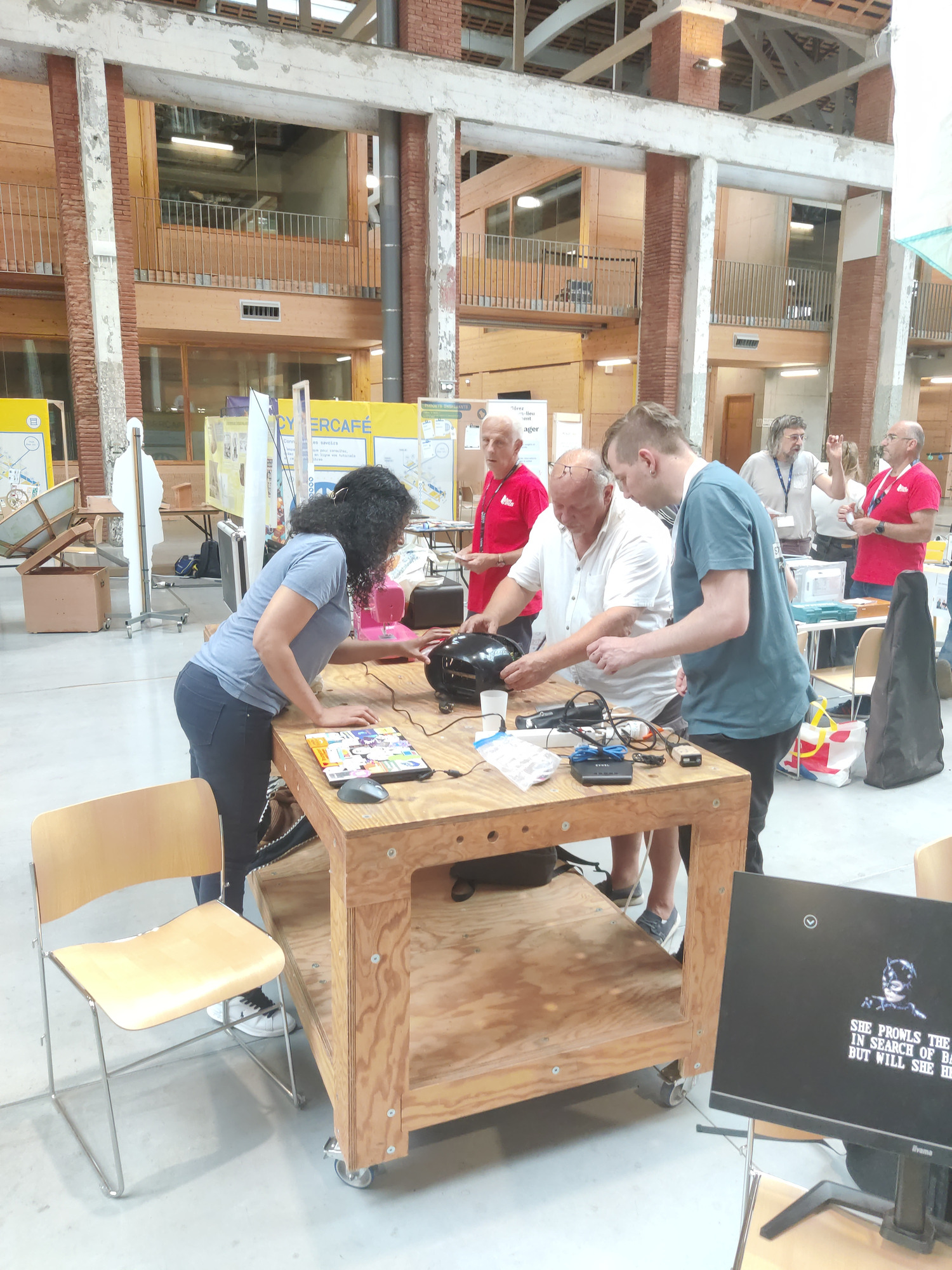
On the second day of the festival, we held an open tech and repair clinic at the Cybercafé from 11 a.m. to 4 p.m. At first, setting up the booth was a bit of a hassle because the tables and power weren’t there yet. I had already organized the peripherals—such as monitors, mice, and keyboards—and set up three laptops and two mini-PCs running different operating systems, as well as the entire network infrastructure with access points, adapters, and cables, so that I would ultimately have the tools for demos and diagnostics.
The first problem was a participant’s device, which wouldn’t turn on at all. She had already tried tinkering with it herself, so I braced myself for a bit of a challenge. Once I opened it up, I could see signs of her previous attempts. I pulled out my multimeter and soldering iron, cleaned the parts, straightened the contacts in the switch, re-soldered cold joints, and secured loose wires. Unfortunately, one part of the circuit was completely shot, so the device was beyond repair. Instead, we donated it to the local Repair Café to be used for spare parts. The best part was that the young woman participated the whole time and now knows exactly what to look out for next time.
The next case was a Windows laptop that felt like it took an eternity to start, got extremely hot and was often just folded and packed by the owner – a classic case of digital traffic jams. First, I cleaned out the autostart and ongoing processes. After that, I switched off animations and transparency, optimized the power options so that it goes to sleep when folded properly and does not overheat, and directly freshly installed and updated standard software such as Office, browser and PDF reader. Now it purres like a kitten again and the owner is happy that she knows how to clean up herself in the autostart.
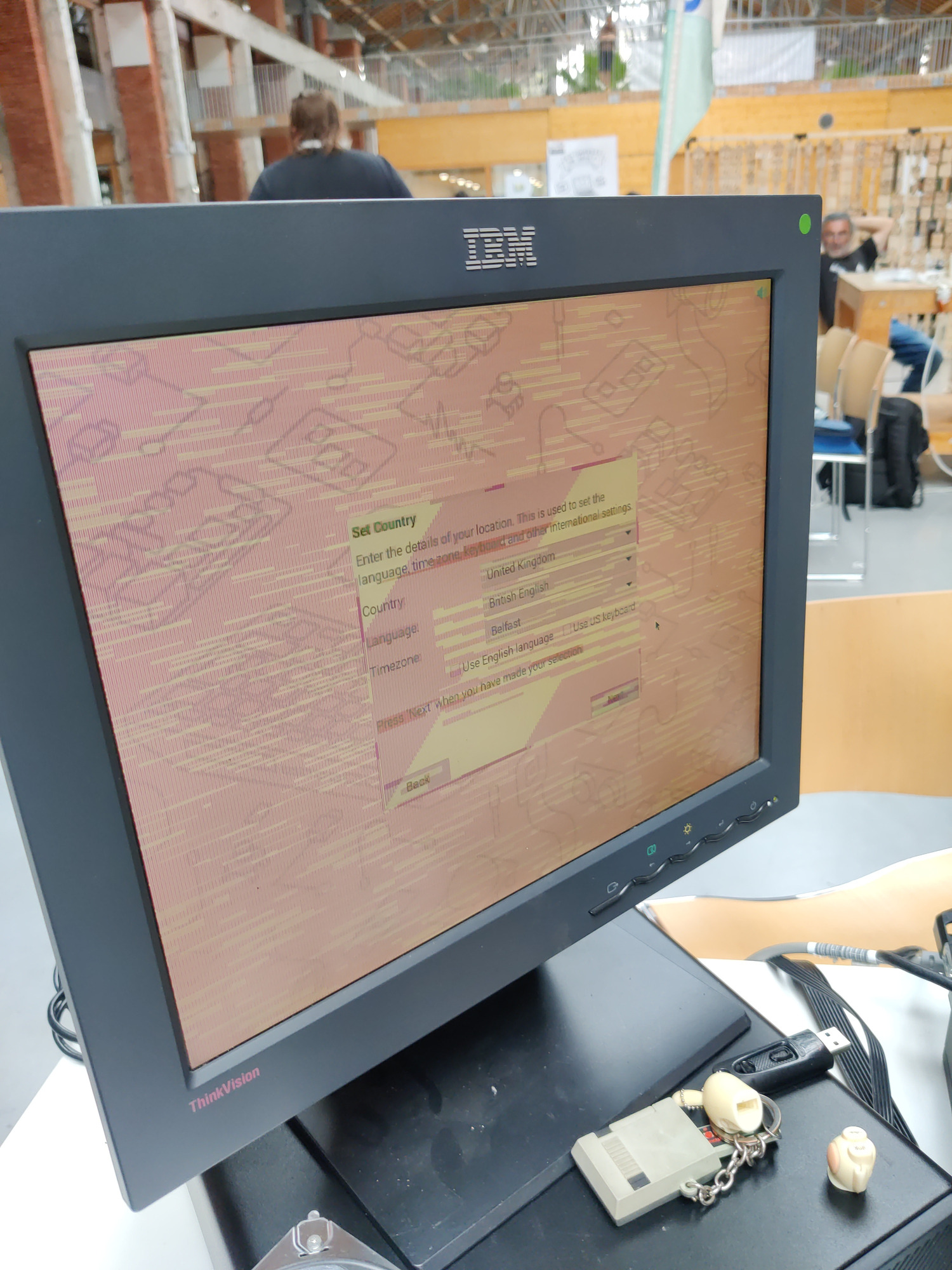
The third participant had a computer from a club that was at least 15 years old, to which he wanted to breathe new life, but needed start-up help with software and components. After a thorough dust removal, I installed a Debian Bullseye as a Raspberry Pi desktop. This runs very smoothly on such old boxes, even if you should of course not make a productive system out of it anymore because of the age of 2022. In addition, we talked about alternative operating systems that can use old devices as software routers, for example. Unfortunately, the old, dusty graphics card has given up in the end, but the participant has spare parts on hand, now knows how important regular maintenance is, and can soon repair the system itself completely.
The afternoon passed with various and varied interim talks and meetings.
I realized in reflection afterwards that I can react much more dynamically to events and pack exactly the tools that are needed. No matter which language is spoken: technical problems are the same everywhere and can be solved. All you need is openness, patience and the will to understand the other person.
Support / Funding
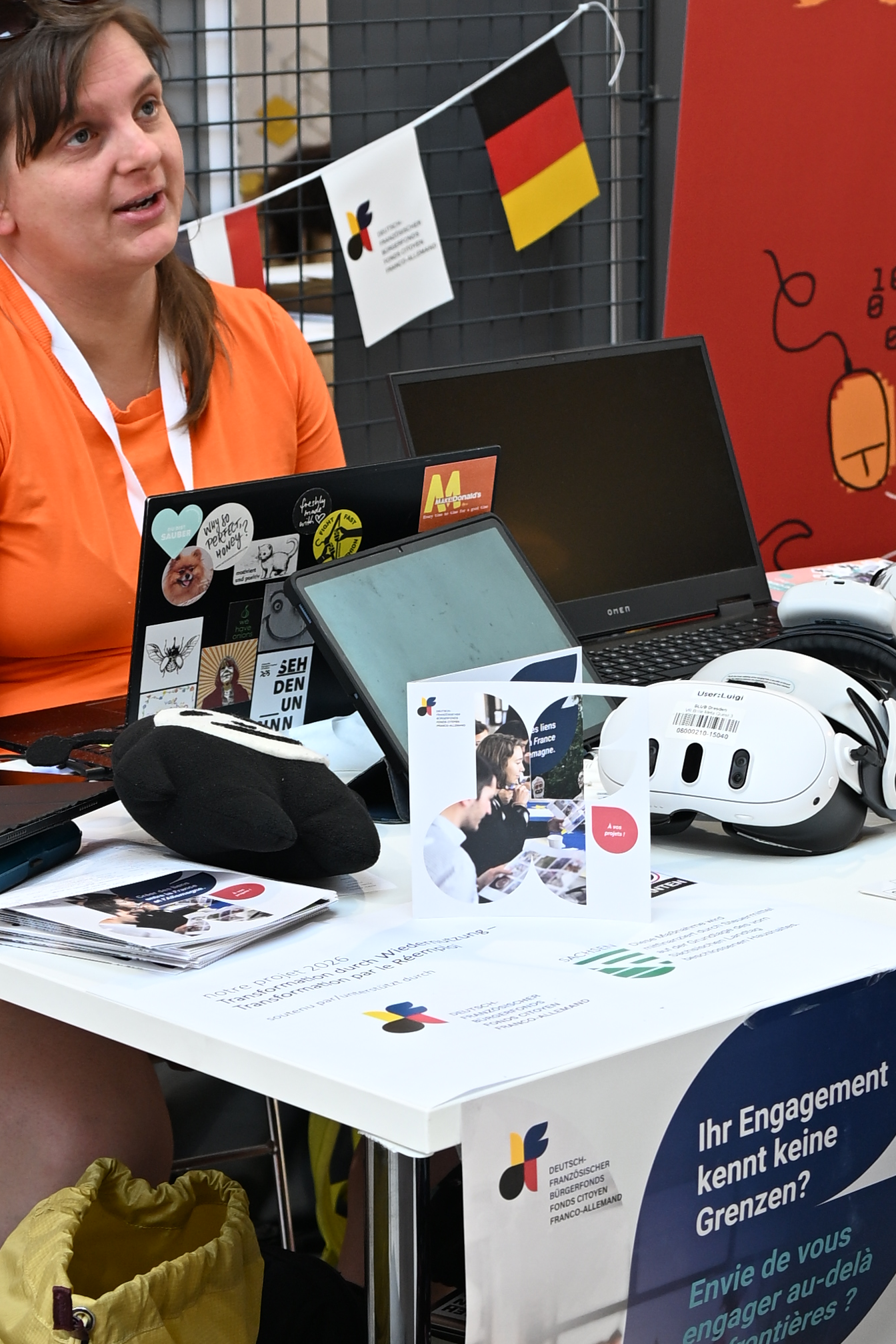
The project is being supported by the Franco-German Citizens’ Fund (Fonds Citoyen Franco-Allemand) from April to September 2026. This initiative is also co-financed by tax revenue in accordance with the budget approved by the Saxon State Parliament.
Our supporters and partners include the French partner network RFF Labs, the German umbrella organisation Verbund Offener Werkstätten e.V., and the European Vulca Organisation for international relations between open workshops (also known as makerspaces), of which we are also a member.
We would like to express our gratitude for the financial support and the excellent networking opportunities, which were made possible several months before the trip thanks to the commitment of many people, in particular RFF Labs and VULCA.

Last but not least, here’s a clip about the Franco-German Citizens’ Fund:
Comments